

Contents
- 1 Latex 60% DRC Production Process at a Glance
- 2 Step 1: Fresh Latex Collection and Preservation
- 3 Step 2: Filtration and Impurity Removal
- 4 Step 3: Centrifugation to Concentrate Latex
- 5 Step 4: Stabilization and Latex Grade Adjustment
- 6 Step 5: Storage and Stabilization
- 7 Step 6: Quality Control
- 8 Step 7: Packing and Export
- 9 Why Process Control Matters to Latex Buyers
- 10 Frequently Asked Questions
- 11 Looking for Natural Rubber Latex 60% DRC?
The Latex 60% DRC production process starts with fresh field latex and includes preservation, filtration, centrifugation, stabilization, storage, quality control and packing.
The key step is centrifugation, which removes part of the liquid serum phase and concentrates the rubber-rich fraction to approximately 60% Dry Rubber Content (DRC).
Fresh Latex → Preservation → Filtration → Centrifugation → 60% DRC Concentrate → Stabilization → Storage → Quality Control → Packing
Latex 60% DRC Production Process at a Glance
| Stage | Main Purpose |
| Collection & Preservation |
Collect and stabilize fresh field latex
|
| Filtration |
Remove physical impurities
|
| Centrifugation |
Concentrate latex to approximately 60% DRC
|
| Stabilization |
Adjust the preservation system
|
| Storage |
Maintain latex stability
|
| Quality Control |
Verify the agreed specification
|
| Packing |
Prepare the latex for shipment
|
Step 1: Fresh Latex Collection and Preservation
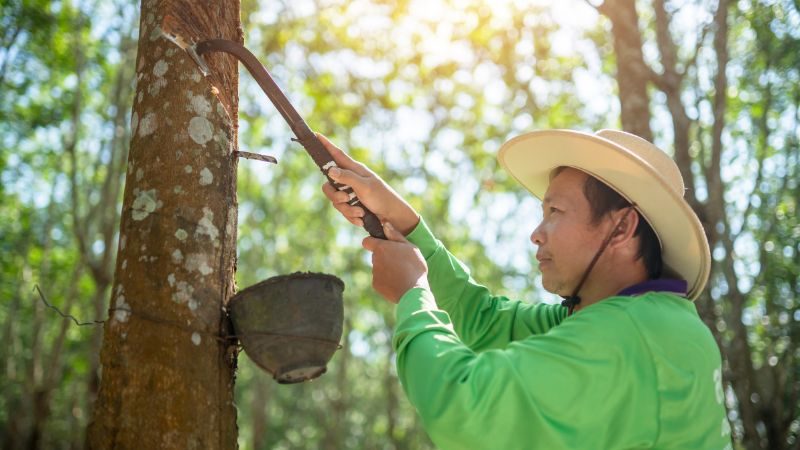
Natural rubber latex is collected from Hevea brasiliensis trees as fresh field latex.
Because fresh latex is a natural colloidal material, it can become unstable or coagulate if it is not properly handled after collection.
A preservation system, commonly involving ammonia, is therefore used to help control microbial activity and maintain latex stability before processing.
After collection and initial preservation, the field latex is transported in suitable tanks to the processing facility.
Before concentration, incoming field latex may also be checked for basic conditions such as DRC, preservation condition and visible signs of premature coagulation.
Step 2: Filtration and Impurity Removal
Before centrifugation, field latex is filtered to remove physical contaminants such as:
- bark particles;
- dirt and sand;
- coagulated particles;
- plant residues;
- other foreign materials.
Filtration and centrifugation are not the same process.
Filtration removes unwanted physical contaminants.
Centrifugation, by contrast, changes the concentration of the latex by separating a rubber-rich fraction from part of the liquid serum phase.
Proper filtration helps prepare cleaner and more consistent field latex for the concentration stage.
Step 3: Centrifugation to Concentrate Latex
Centrifugation is the key concentration step in the Latex 60% DRC production process.
Fresh field latex normally contains much less dry rubber than commercial concentrated latex. After filtration, it is fed into a high-speed centrifuge.
The centrifuge separates the latex into fractions mainly according to differences in density.
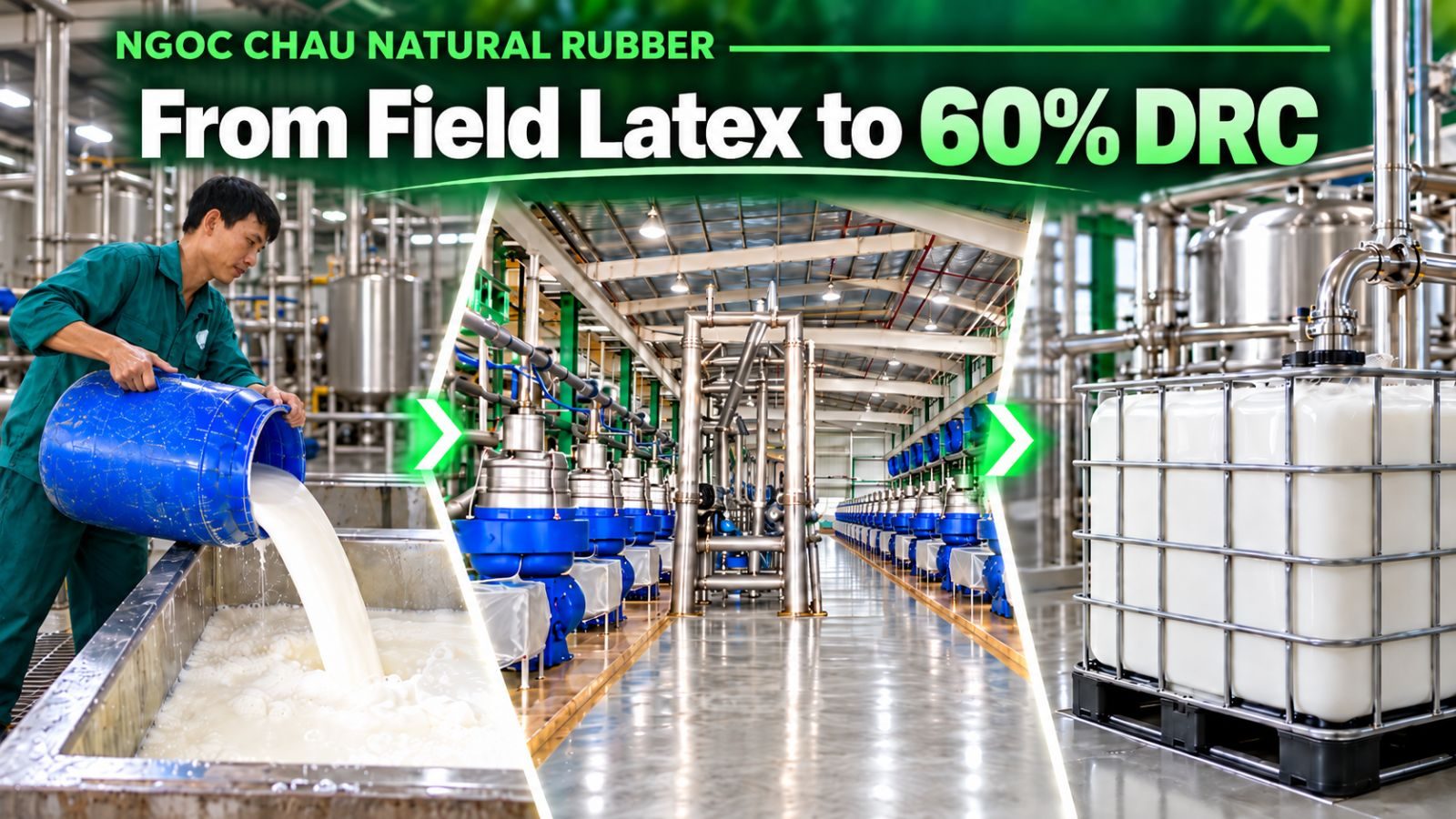
The process produces:
- a rubber-rich latex concentrate; and
- a serum-rich or skim fraction containing much less rubber.
As part of the liquid serum phase is removed, the proportion of dry rubber in the concentrated fraction increases.
The resulting concentrate is then controlled to meet the required specification for Natural Rubber Latex 60% DRC.
An important point is:
Centrifugation does not create additional rubber. It increases DRC by reducing the proportion of the liquid serum phase.
This is why lower-DRC field latex can be converted into concentrated latex with approximately 60% Dry Rubber Content.
The skim fraction still contains some rubber and may be processed separately for further rubber recovery.
Centrifugation also reduces the amount of water transported with the commercial product and produces a more standardized raw material for industrial manufacturing.
Step 4: Stabilization and Latex Grade Adjustment
After centrifugation, concentrated latex requires an appropriate preservation system to maintain stability during storage and transportation.
Two common commercial grades are:
High Ammonia (HA) Latex
HA Latex uses a relatively higher ammonia level to provide strong preservation and storage stability.
Low Ammonia (LA) Latex
LA Latex uses a lower ammonia level together with an appropriate secondary preservation system.
Depending on supplier and customer specifications, intermediate ammonia levels may also be offered commercially as Medium Ammonia (MA) Latex.
The grade name alone is not enough for technical evaluation.
Buyers should confirm:
Required Grade → Technical Specification → Ammonia/Alkalinity Requirement → Batch COA
The suitable grade depends on the buyer’s formulation, production process and approved raw-material specification.
Step 5: Storage and Stabilization
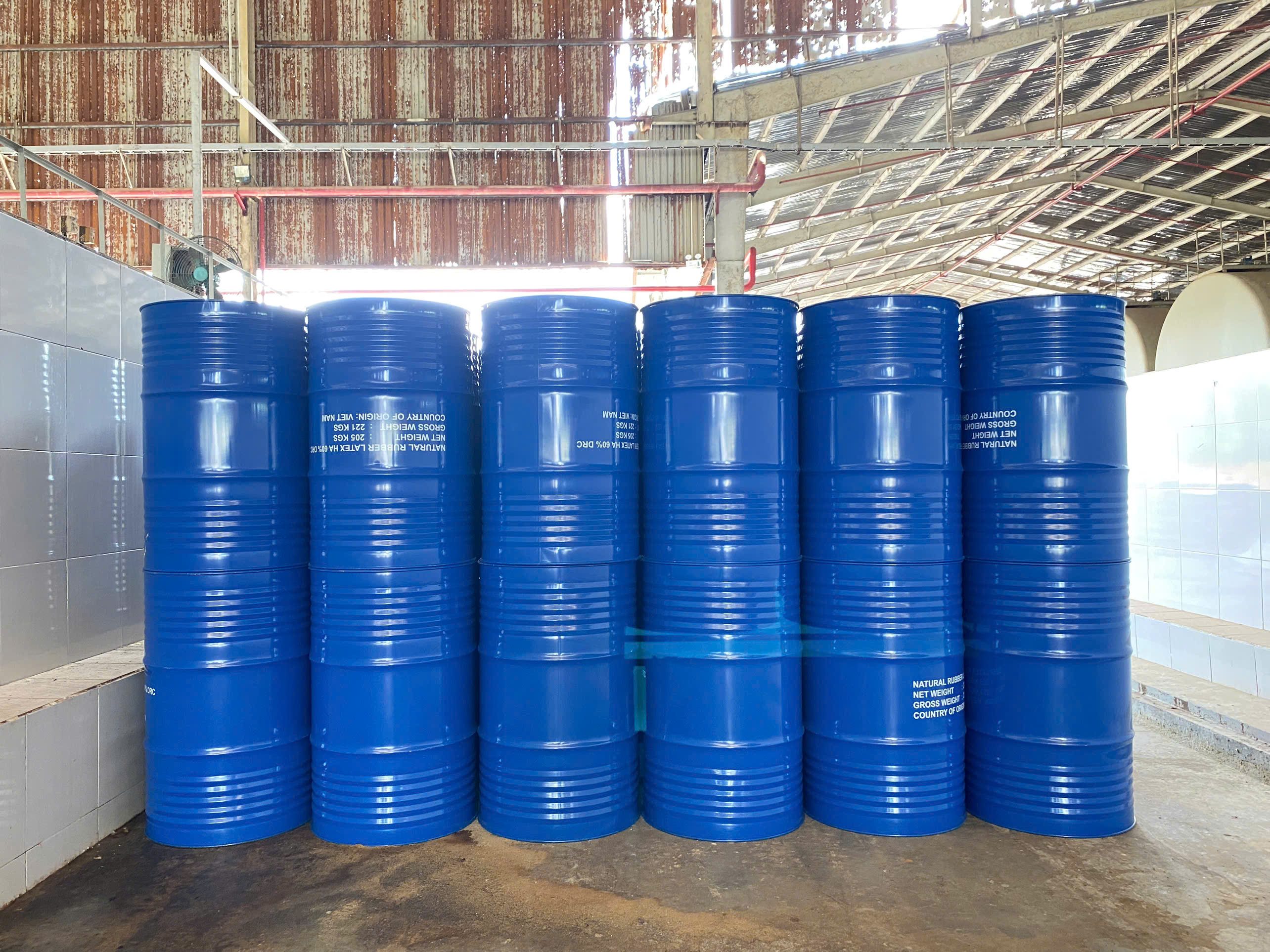
After concentration and stabilization, latex is stored under controlled conditions before release or shipment.
Natural Rubber Latex should be protected from:
- contamination;
- excessive heat;
- dirty tanks or transfer equipment;
- oil and grease;
- incompatible chemicals;
- uncontrolled water or foreign materials.
Storage conditions depend on the latex grade, preservation system, packaging and storage period.
For detailed recommendations, see How to Preserve Natural Rubber Latex 60% DRC.
Step 6: Quality Control
DRC is important, but it is not the only parameter buyers should review.
Typical quality-control parameters include:
| Parameter |
What It Indicates
|
| DRC |
Actual dry rubber content
|
| TSC |
Total solids in the latex
|
| MST |
Stability under mechanical agitation
|
| VFA No. |
Indicator related to bacterial activity and preservation condition
|
| Coagulum |
Unwanted coagulated rubber particles
|
| Ammonia / Alkalinity |
Preservation and ammonia condition
|
Additional parameters may be tested depending on the agreed product specification and end-use requirements.
Recognized technical references for concentrated natural rubber latex include ISO 2004:2024 and ASTM D1076, where applicable.
For buyers, the key question should not simply be:
“Is the DRC 60%?”
A better question is:
“Does this batch meet our approved raw-material specification and production requirements?”
A practical purchasing and quality-control approach is:
Technical Specification → Batch COA → Incoming QC → Production Evaluation
This helps buyers evaluate the actual batch instead of relying on one parameter alone.
For more detail, see How to Test the Quality of Natural Rubber Latex 60% DRC.
Step 7: Packing and Export


After the batch passes the required quality checks, Natural Rubber Latex 60% DRC can be packed for shipment.
| Packing |
Typical Ngoc Chau Configuration
|
| Flexibag | Approx. 21 MT |
| Steel Drum | Approx. 200 kg |
| IBC Tank | Approx. 960 kg |
| Jerry Can |
Smaller-volume packing
|
The suitable packing depends on order volume, unloading equipment, storage facilities and factory handling requirements.
For more detail, see the Natural Rubber Latex Packing Guide.
Why Process Control Matters to Latex Buyers
Consistent process control helps industrial buyers reduce raw-material variation between shipments.
Important factors include:
- DRC;
- preservation condition;
- coagulum;
- mechanical stability;
- viscosity;
- batch consistency.
These factors can affect how latex behaves during dipping, foaming, adhesive production, rubber-thread manufacturing and other industrial processes.
However:
No single latex parameter can guarantee finished-product performance.
Factories should evaluate latex against their own formulation, production conditions and approved raw-material specification.
A practical buyer should review:
Latex Grade + Technical Specification + Batch COA + Incoming QC
rather than selecting material based only on DRC or price.
Frequently Asked Questions
How is Natural Rubber Latex 60% DRC produced?
The Latex 60% DRC production process includes fresh latex collection, preservation, filtration, centrifugation, stabilization, quality control and packing. Centrifugation concentrates the rubber-rich fraction to approximately 60% Dry Rubber Content.
How does centrifugation increase DRC?
Centrifugation removes part of the liquid serum phase while retaining a rubber-rich latex fraction. As the proportion of liquid decreases, the percentage of dry rubber in the concentrated latex increases.
Why is centrifugation used in latex production?
Centrifugation converts lower-DRC field latex into a more concentrated and standardized industrial raw material. It also reduces the amount of water transported with the commercial latex.
What is the difference between HA and LA Latex?
HA Latex uses a higher ammonia level for preservation. LA Latex uses less ammonia together with an appropriate secondary preservation system. The suitable grade should follow the buyer’s approved technical specification and production requirements.
Which quality parameters are tested in Latex 60% DRC?
Common parameters include DRC, TSC, MST, VFA, coagulum and ammonia or alkalinity. Additional parameters may be tested depending on the agreed product specification.
How is Latex 60% DRC packed for export?
Common packing options include Flexibag, Steel Drum, IBC Tank and Jerry Can. The best option depends on shipment volume, unloading equipment, storage facilities and factory handling requirements.
Looking for Natural Rubber Latex 60% DRC?
Ngoc Chau supplies Natural Rubber Latex 60% DRC for industrial buyers.
If you are evaluating a supplier, send us your:
- intended application;
- required latex grade;
- technical specification;
- required quantity;
- preferred packing;
- destination port.
We can provide the relevant Technical Specification, Batch COA, packing information and quotation for your evaluation.
Hotline / Mobile: +84 762 798 888
Email: info@ngocchausupplier.com


 Ms Evan