

Contents
- 1 What Is Ribbed Smoked Sheet?
- 2 How Are RSS Grades Classified?
- 3 RSS Grades Explained: RSS 1 to RSS 5
- 4 Common Applications of Ribbed Smoked Sheet
- 5 How Is Ribbed Smoked Sheet Produced?
- 6 RSS Packing & Container Loading
- 7 What Should Buyers Check Before Ordering RSS?
- 8 RSS 1 & RSS 3 from Vietnam
- 9 Frequently Asked Questions
- 10 Conclusion
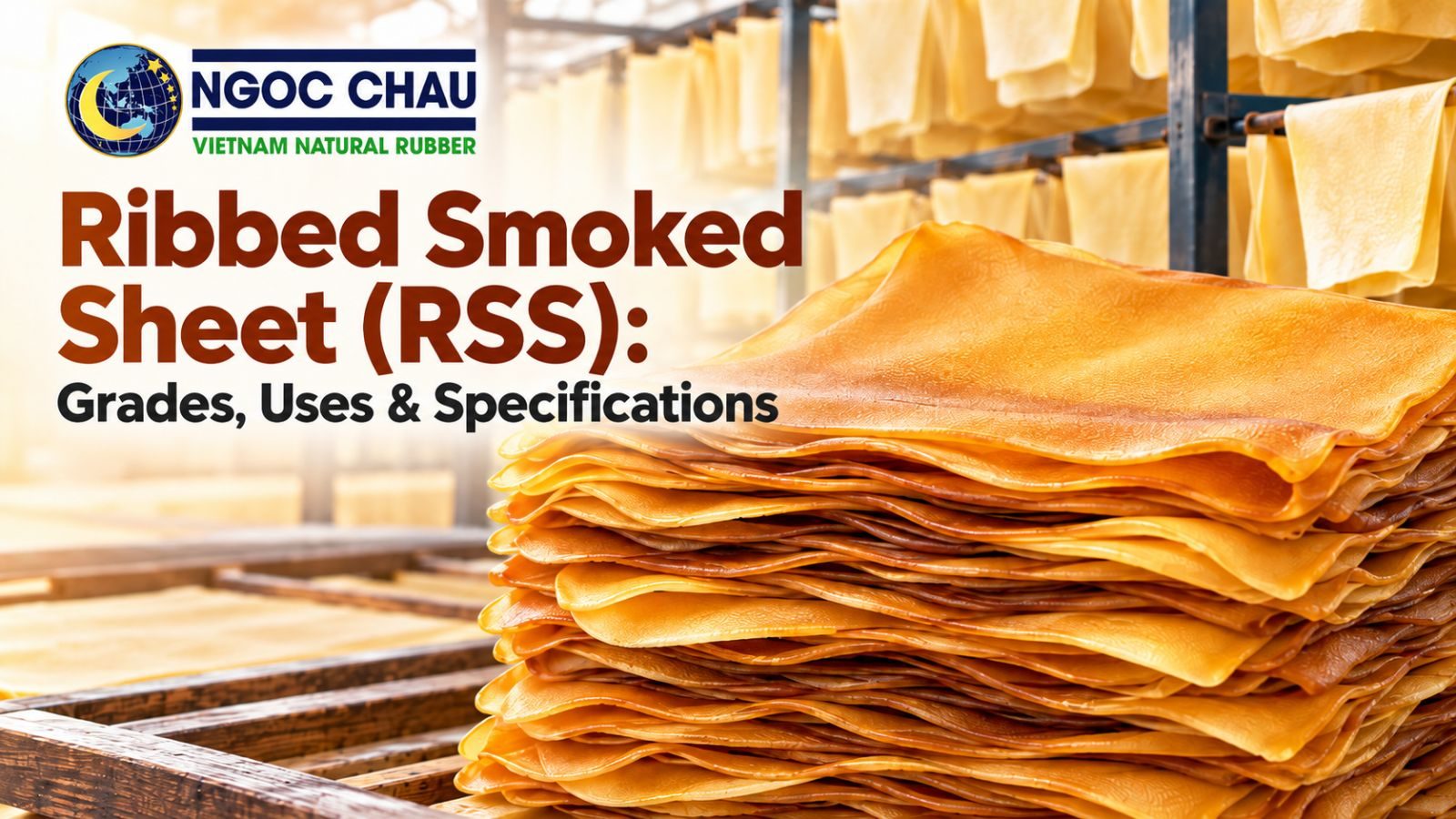
Ribbed Smoked Sheet (RSS) is a dry natural rubber made from field latex that is coagulated, rolled into ribbed sheets, dried, smoke-cured and visually graded. RSS is commonly classified from RSS 1 to RSS 5 according to sheet quality and the type and extent of permitted visual defects such as mould, bubbles, bark specks, stains and smoking defects.
What Is Ribbed Smoked Sheet?
Ribbed Smoked Sheet is a traditional form of processed natural rubber made from fresh field latex.
The name describes how the material is produced:
- Ribbed: rollers create grooves on the rubber sheet.
- Smoked: the sheets are dried and cured in a smokehouse.
- Sheet: the rubber is processed into individual sheets before grading and baling.
After processing, the sheets are inspected for appearance, condition and permitted defects before being assigned an RSS grade.
How Are RSS Grades Classified?
RSS grades are primarily classified by visual quality and the type and extent of defects permitted in the finished sheets.
Typical grading observations include:
- dryness and firmness;
- smoking condition;
- colour blemishes;
- mould and resinous matter;
- bubbles and blisters;
- bark specks;
- oxidized spots or streaks;
- dirt and foreign matter.
RSS grade should not be interpreted simply as a mechanical-strength ranking. If a factory also requires specific laboratory parameters or COA values, those requirements should be agreed separately from the visual RSS grade.
RSS Grades Explained: RSS 1 to RSS 5
The main difference between RSS grades is the level and type of visual imperfections permitted while the sheets still meet the applicable grade requirements.
1. RSS 1
- Mould / resinous matter: Very limited.
- Visual defects: Only small scattered pinhead bubbles and very limited visible imperfections.
- Sheet condition: Dry, clean, strong, sound and evenly smoked.
- Practical meaning: The strictest visual requirements among RSS 1–5.
2. RSS 2
- Mould / resinous matter: Slight tolerance.
- Visual defects: Small bubbles and slight bark specks may be accepted.
- Sheet condition: Dry, clean, strong and sound.
- Practical meaning: Slightly broader visual tolerance than RSS 1.


3. RSS 3
- Mould / resinous matter: Slight tolerance within grade limits.
- Visual defects: Small bubbles, bark specks and slight blemishes may be accepted.
- Sheet condition: Dry, strong and properly smoked.
- Practical meaning: Broader visual tolerance than RSS 1–2 while still meeting RSS 3 grading requirements.
4. RSS 4
- Mould / resinous matter: Higher tolerance.
- Visual defects: More bubbles, stains and other visible imperfections may be permitted.
- Sheet condition: Must remain within the applicable RSS 4 requirements.
- Practical meaning: Wider visual tolerance than RSS 1–3.
5. RSS 5
- Mould / resinous matter: Highest tolerance among RSS 1–5.
- Visual defects: Larger bark particles, bubbles, blisters and blemishes may be permitted.
- Sheet condition: More visual variation is accepted within the grade.
- Practical meaning: Broadest visual tolerance among RSS 1–5.
Key Takeaways
- RSS 1 has the strictest visual acceptance requirements among RSS 1–5.
- Permitted visual imperfections generally increase as the grade number increases.
- RSS grade is primarily based on visual classification, not simply mechanical strength.
- Buyers should confirm the required grade and acceptance criteria before ordering.
Common Applications of Ribbed Smoked Sheet
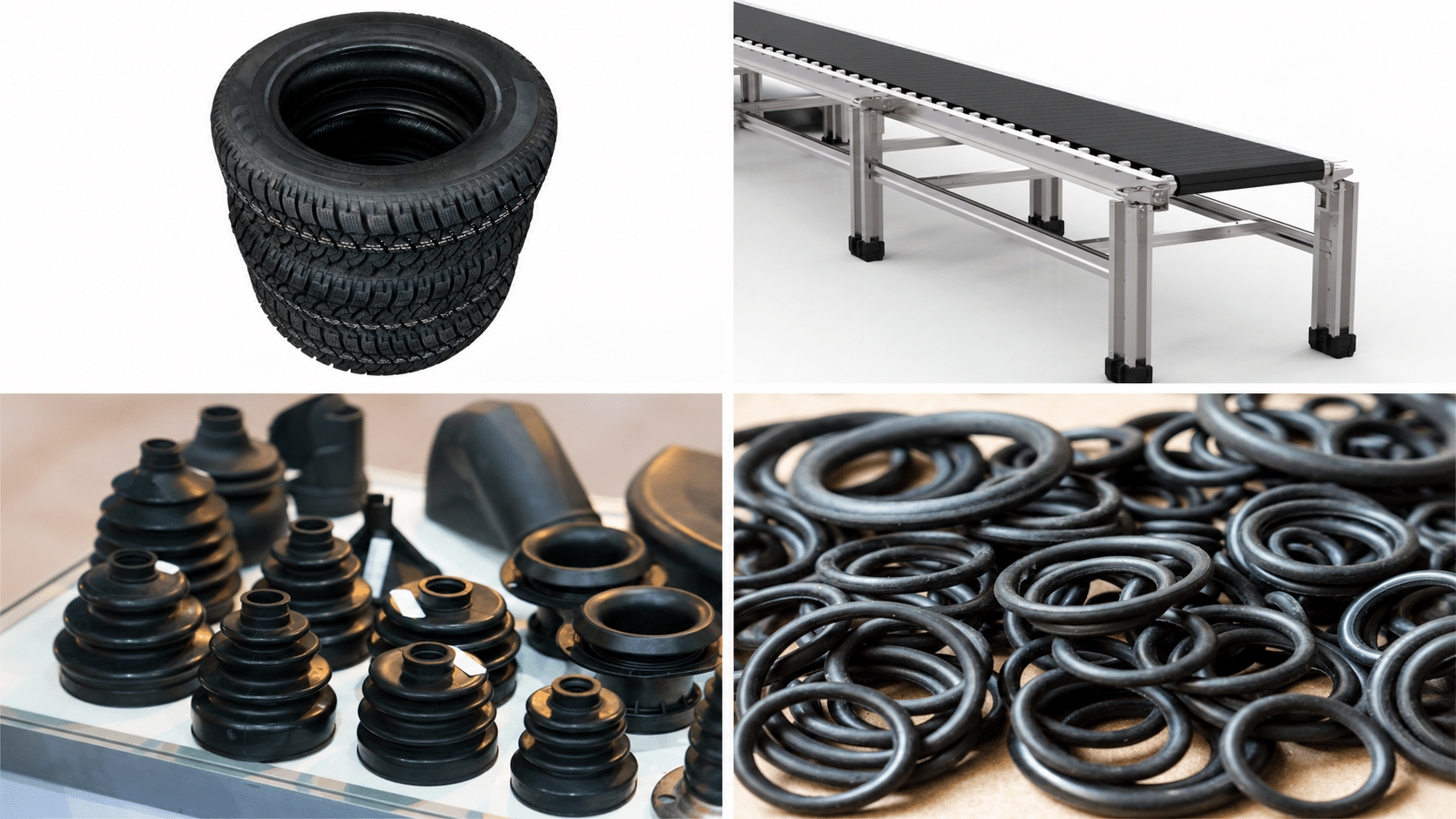
RSS is mainly used as a natural rubber raw material for solid rubber compounds.
| Application | Typical Use |
| Tires |
Natural rubber component in tire compounds
|
| Conveyor Belts |
Industrial rubber compounds
|
| Hoses |
Flexible technical rubber products
|
| Gaskets & Seals |
Molded rubber components
|
| Rubber Parts |
Automotive and industrial molded products
|
| Footwear |
Soles and rubber components
|
The required RSS grade depends on the manufacturer’s formulation, quality standard and purchasing specification.
How Is Ribbed Smoked Sheet Produced?
The RSS production process can be summarized in eight steps:
- Latex Collection – Fresh field latex is collected for processing.
- Coagulation – Latex is coagulated to form solid natural rubber.
- Sheet Formation – The coagulated rubber is rolled into sheets.
- Washing – Sheets are washed to remove residues and contaminants.
- Ribbing – Rollers create the characteristic ribbed surface.
- Drying & Smoking – Sheets are dried and smoke-cured.
- Grading – Finished sheets are visually inspected and classified.
- Baling – Approved sheets are compressed and packed for shipment.
RSS Packing & Container Loading
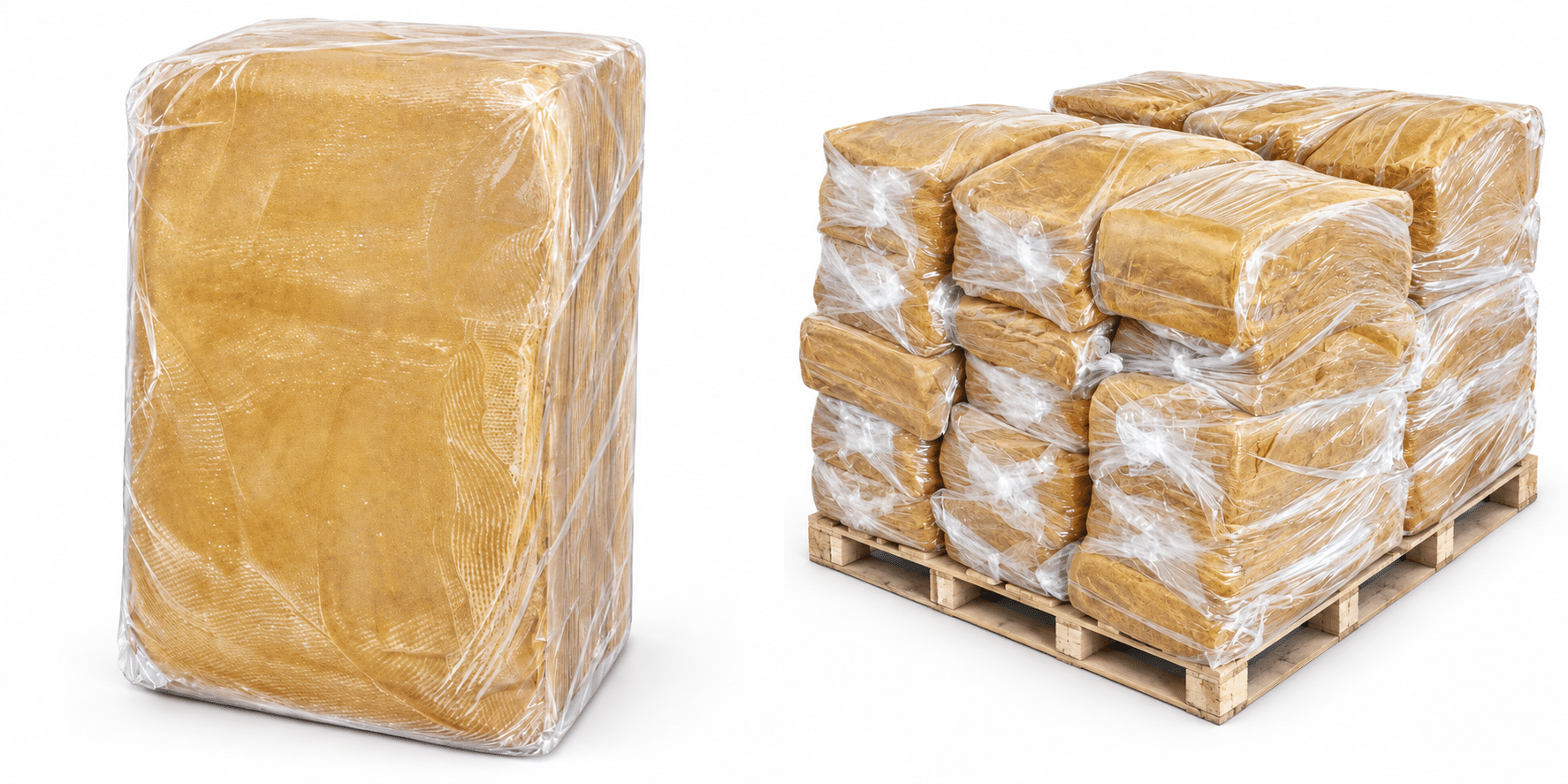
Ngoc Chau supplies RSS in 33.33 kg and 35 kg bales, with both loose-bale and palletized options.
| Bale weight | Loose bales | Palletized bales |
| 33.33 kg | Approx. 600–630 bales/container; 20–21 MT | 36 bales/pallet × 16 pallets = 576 bales; approx. 19.2 MT/container |
| 35 kg | Approx. 600–630 bales/container; 21–22.05 MT | 36 bales/pallet × 16 pallets = 576 bales; approx. 20.16 MT/container |
Actual loading should be confirmed for each shipment according to bale weight, packing configuration and buyer requirements.
What Should Buyers Check Before Ordering RSS?
Before confirming an RSS order, buyers should check:
- required RSS grade;
- applicable grading standard;
- visual acceptance criteria;
- sample approval requirements;
- inspection requirements;
- bale weight;
- loose or palletized packing;
- shipment quantity;
- country of origin;
- destination port;
- Incoterm;
- required export documents;
- COA or additional laboratory requirements, if applicable.
RSS grade is primarily a visual classification. Laboratory parameters and COA requirements should be agreed separately when required by the buyer.
RSS 1 & RSS 3 from Vietnam
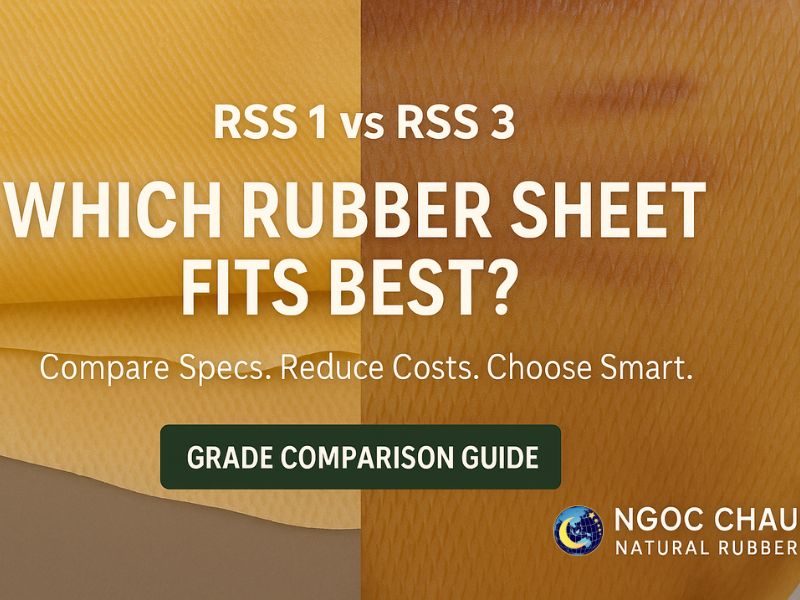
RSS 1 and RSS 3 belong to the same Ribbed Smoked Sheet family but have different visual acceptance limits. RSS 1 follows stricter requirements for appearance and visible imperfections, while RSS 3 permits more minor defects within its grade criteria.
Ngoc Chau Natural Rubber focuses on supplying RSS 1 and RSS 3 from Vietnam for international B2B buyers.
For more information:
- RSS 1 vs RSS 3 – detailed comparison between the two grades.
- RSS 1 Natural Rubber – RSS 1 product information.
- RSS 3 Natural Rubber – RSS 3 product information.
For enquiries, buyers can provide the required grade, quantity, packing method, destination port and documentation requirements.
Frequently Asked Questions
What is Ribbed Smoked Sheet?
Ribbed Smoked Sheet is a dry natural rubber made from field latex that is coagulated, rolled into ribbed sheets, dried, smoke-cured and visually graded before baling.
How are RSS grades classified?
RSS grades are classified primarily by visual quality and permitted defects, including mould, bubbles, bark specks, colour blemishes, smoking condition and overall sheet quality.
What are the main RSS grades?
The commonly used grades include RSS 1, RSS 2, RSS 3, RSS 4 and RSS 5. Each grade allows different levels of visual imperfections.
What is the difference between RSS 1 and RSS 3?
RSS 1 has stricter visual acceptance requirements, while RSS 3 permits more minor defects within its grade requirements. See the detailed RSS 1 vs RSS 3 comparison.
How is RSS packed for export?
Common export configurations include 33.33 kg or 35 kg bales, shipped loose or palletized in 20-foot containers.
Conclusion
Ribbed Smoked Sheet is primarily a visually graded natural rubber, and the key difference between RSS grades is the level of permitted visual imperfections.
Before ordering, buyers should confirm the required grade, grading standard, packing, inspection and any additional COA requirements. Ngoc Chau Natural Rubber focuses on supplying RSS 1 and RSS 3 for international buyers.
Hotline / WhatsApp: +84 762 798 888
Email: info@ngocchausupplier.com


 Ms Evan