

Contents
To preserve natural rubber RSS3, keep the bales in a clean, dry, well-ventilated warehouse, away from direct sunlight, excessive heat, moisture, and contamination. For raw rubber bales, 10–35°C is a general storage temperature reference, although conditions around 20°C or above help reduce the risk of low-temperature crystallization.
At Ngoc Chau Natural Rubber, we recommend keeping protective packaging intact, preventing water condensation, and checking the condition of rubber before use. These basic precautions help importers and manufacturers protect RSS3 during storage and handling.
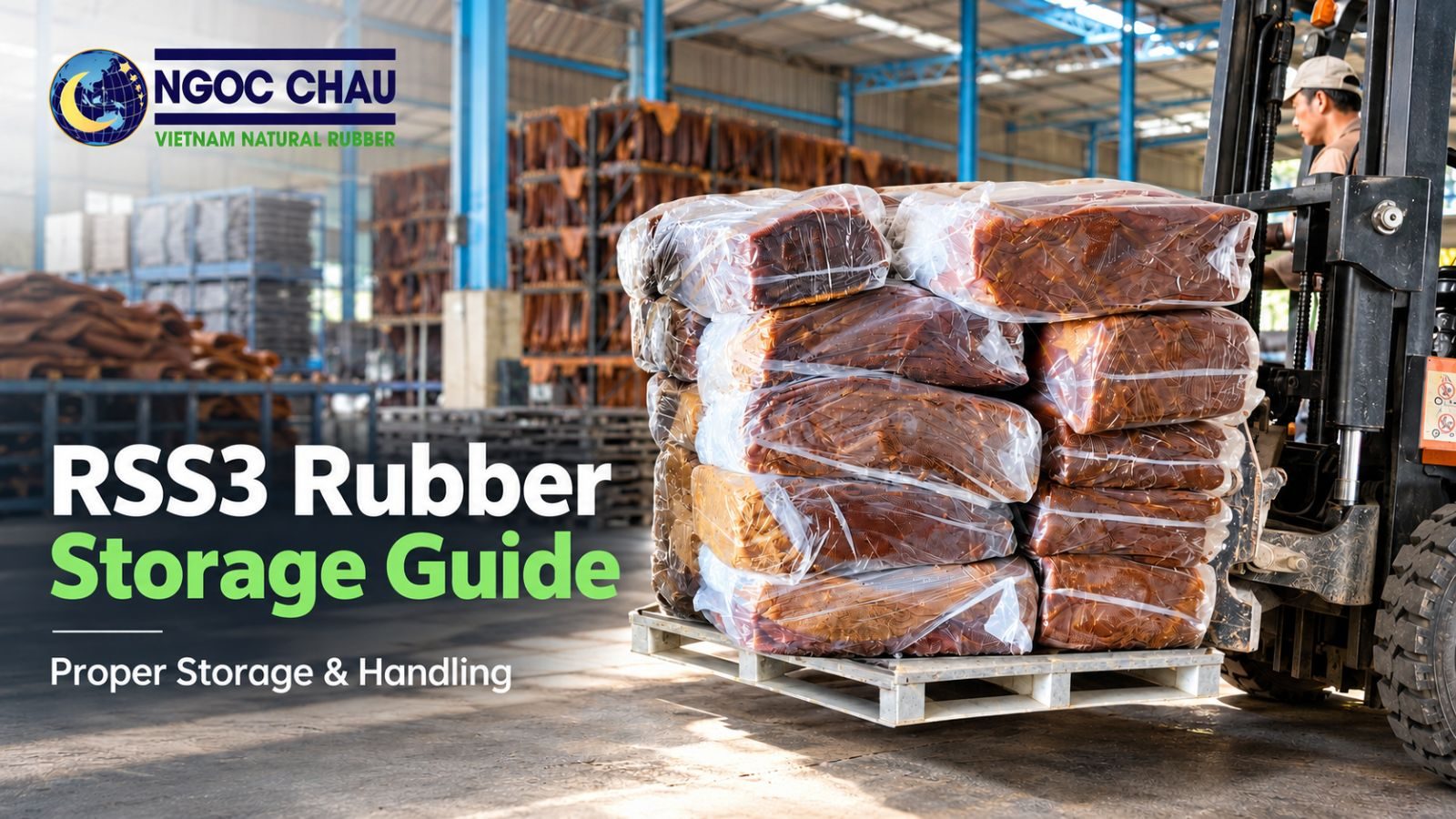
Recommended Storage Conditions for RSS3 Rubber
Good storage conditions help maintain RSS3 quality from warehouse storage to delivery and production.
| Storage Factor |
Recommended Practice
|
| Temperature |
Use 10–35°C as a general raw rubber storage reference; avoid excessive heat
|
| Humidity |
Keep bales dry and prevent water condensation
|
| Sunlight |
Protect rubber from direct sunlight and strong UV exposure
|
| Warehouse |
Choose a clean, dry, well-ventilated storage area
|
| Heat Sources |
Keep bales away from heaters and other heat sources
|
| Packaging |
Maintain protective wrapping until the rubber is needed
|
| Stock Rotation |
Follow first-in, first-out (FIFO) inventory management
|
For RSS3 storage, our advice is to focus on preventing moisture exposure, temperature extremes, and contamination rather than relying on one fixed humidity percentage.
The temperature range above is a general reference for raw rubber bales, not a guaranteed operating range specifically established for RSS3. Actual storage conditions should also consider the warehouse environment and the buyer’s quality requirements.
How to Store RSS3 Rubber Properly
For importers and manufacturers handling RSS3, the following five steps provide a practical approach to warehouse storage and shipping.
1. Choose a Suitable Warehouse
Store RSS3 bales in a clean, sheltered warehouse with suitable airflow. Keep the storage area protected from rain, direct sunlight, and excessive heat.
Check the roof, floor, and surrounding areas for leaks or damp conditions. This is particularly important in humid climates and during rainy seasons.
2. Stack and Protect Rubber Bales
Place bales on suitable pallets or supports to keep them away from damp floors. Stack them securely to reduce deformation and handling damage.
Avoid broken pallets, wood splinters, and contact with unrelated cargo that may contaminate the rubber.
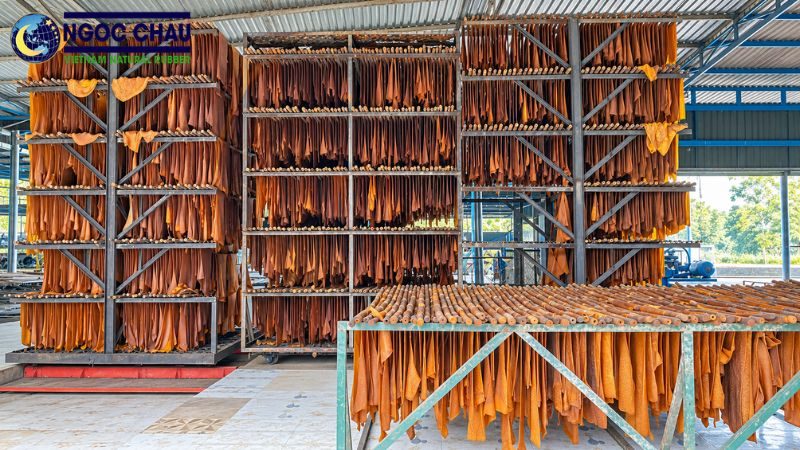
3. Maintain Protective Packaging
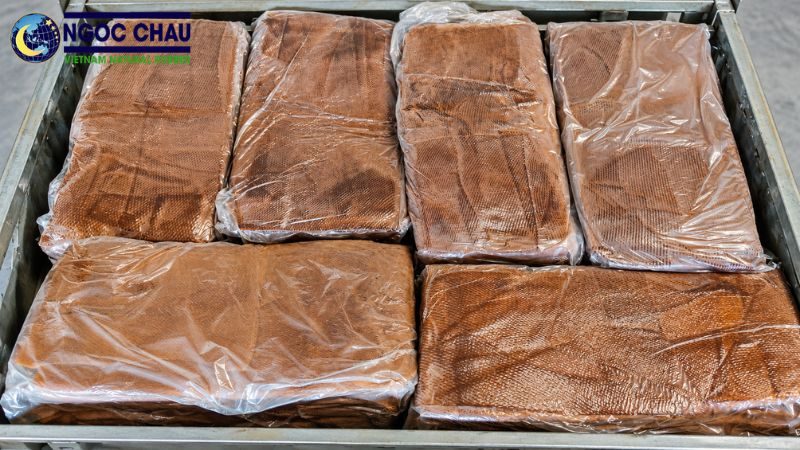
Protective packaging helps keep RSS3 clean during storage, loading, and transportation.
Ngoc Chau Natural Rubber lists 33.33 kg and 35 kg bales, with loose-bale and palletized packing options for export shipments.
The choice between loose and palletized packing should consider container loading, unloading equipment, and the buyer’s warehouse handling requirements.
Keep the wrapping intact until the rubber is needed. If a package is opened or damaged, protect the remaining material from dust, water, and other contaminants.
Final bale weight, wrapping, pallet arrangement, and loading quantity should be confirmed for each shipment.
4. Prevent Damage During Container Shipping
For RSS3 export shipments, a clean and dry container is essential to reduce the risk of moisture damage and contamination.
Before loading, check that the container is free from water leaks, unwanted odors, and debris. Arrange and secure the bales to minimize movement or packaging damage during transportation.
Avoid exposing rubber to rain during loading and unloading. Importers should also inspect the cargo condition when the container arrives.
5. Inspect and Rotate Stock
We recommend following FIFO inventory rotation to avoid unnecessary long-term storage.
Maintain clear batch identification and check bales for damaged packaging, visible moisture, mold, contamination, or unusual deformation.
If any material appears abnormal, keep it separate and arrange further quality assessment before releasing it for production.
How Long Can RSS3 Rubber Be Stored?
RSS3 rubber does not have one fixed shelf life that applies to every shipment. Its suitability for use depends on storage conditions, packaging integrity, batch condition, and the manufacturer’s quality requirements.
Proper storage helps reduce deterioration, but it does not guarantee that rubber properties will remain unchanged indefinitely.
Before using RSS3 after extended storage, we recommend checking:
- Packaging: Is the wrapping intact and dry?
- Moisture: Are there signs of water exposure or condensation?
- Surface condition: Is there unusual mold, discoloration, or contamination?
- Bale condition: Are the bales significantly deformed or unusually sticky?
- Batch identification: Are the grade and batch records available?
If the condition is uncertain, the buyer should arrange inspection or testing according to the agreed quality requirements before processing.
Common RSS3 Storage Problems and Prevention
During storage and transportation, RSS3 may be affected by moisture, heat, contamination, or changes in material condition.
| Problem | Possible Cause |
Recommended Prevention
|
| Moisture damage or mold | Rain, condensation, or damp storage |
Keep bales and packaging dry
|
| Surface deterioration | Excessive heat or direct sunlight |
Store away from heat and strong light
|
| Contamination | Dust, damaged pallets, or torn wrapping |
Keep storage areas clean and packaging intact
|
| Hardening or handling difficulties | Storage-related changes or low-temperature crystallization |
Maintain suitable conditions and inspect before use
|
Not every difference in appearance means RSS3 has deteriorated. As a visually graded natural rubber, RSS3 may have certain permitted characteristics depending on the agreed grading requirements.
However, any new signs of moisture damage, mold, or unusual changes should be checked before the material is accepted for production.
Frequently Asked Questions
Can RSS3 rubber be stored outdoors?
Outdoor storage is not recommended. RSS3 should be protected from rain, direct sunlight, moisture, and contamination. A clean, dry, sheltered warehouse is more suitable for protecting rubber bales.
Do RSS1 and RSS3 require different storage conditions?
RSS1 and RSS3 are both Ribbed Smoked Sheet natural rubber grades, so their basic storage requirements are similar.
Both should be kept dry and protected from heat, sunlight, and contamination. However, their visual grading requirements differ, so buyers should maintain the agreed quality grade during storage and handling.
Learn more in our RSS1 vs RSS3 Natural Rubber Comparison.
What should buyers inspect before using stored RSS3?
Check the packaging, moisture exposure, bale condition, surface appearance, and batch identification.
If the rubber shows signs of damage or unusual changes, further inspection or testing may be needed before it is used in manufacturing.
Can RSS3 rubber bales be stored without protective wrapping?
We recommend keeping the original protective wrapping until the rubber is needed.
Without suitable protection, RSS3 is more exposed to dust, moisture, and contamination. If wrapping is removed or damaged, the remaining rubber should be properly protected.
Conclusion
To preserve natural rubber RSS3, focus on dry storage, suitable temperatures, protective packaging, and regular inspection. The same basic principles also apply to RSS1.
At Ngoc Chau Natural Rubber, we offer RSS3 in loose-bale and palletized packing options for export. Explore our RSS3 Natural Rubber page or contact us for product specifications, packing details, and shipment requirements.
Hotline / WhatsApp: +84 762 798 888
Email: info@ngocchausupplier.com


 Ms Evan