

Contents
- 1 What Is Latex Rubber Thread Made Of?
- 2 Why Is Natural Rubber Latex Used for Rubber Thread?
- 3 How Is Rubber Thread Manufactured from Natural Latex?
- 4 What Latex Specifications Matter for Rubber Thread Production?
- 5 How to Choose the Right Latex Grade for Rubber Thread?
- 6 What Should Manufacturers Check Before Buying Latex?
- 7 Frequently Asked Questions
- 8 Conclusion
Natural Rubber Latex 60% DRC is a commonly used raw material for manufacturing latex rubber thread. The concentrated latex is mixed with suitable compounding ingredients before being formed into continuous rubber threads, coagulated, dried, and vulcanized.
The suitability of latex for thread production depends on its technical properties, preservation system, and compatibility with the manufacturing process. Manufacturers should evaluate latex specifications and conduct production trials before selecting a grade.
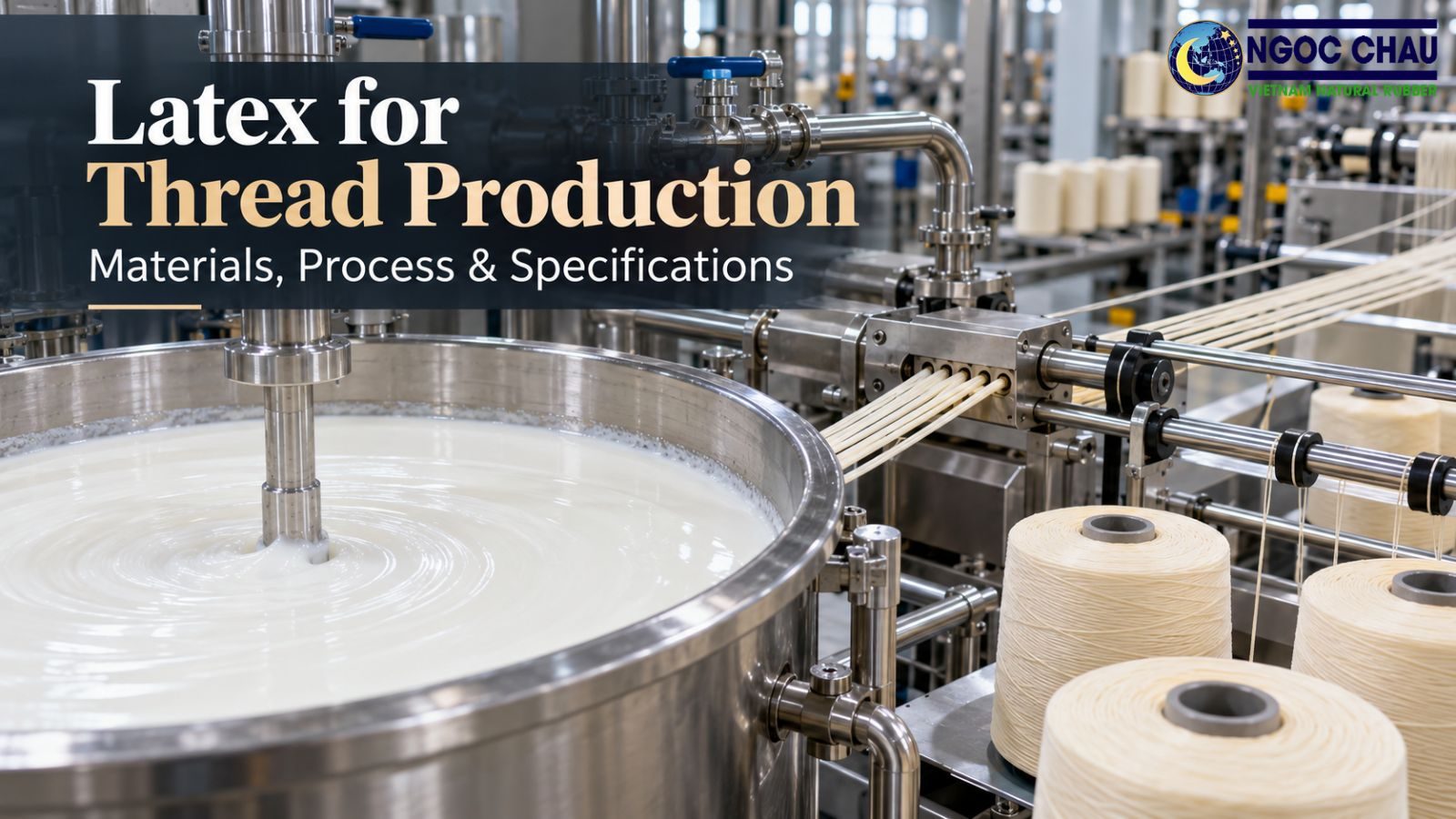
What Is Latex Rubber Thread Made Of?
Latex rubber thread is made from natural rubber latex and selected compounding ingredients that help develop the required processing and final product properties.
The main raw materials include:
-
Natural Rubber Latex: A liquid dispersion obtained from the Hevea brasiliensis rubber tree. Manufacturers commonly use concentrated natural rubber latex containing approximately 60% dry rubber.
-
Vulcanizing Agents: Chemicals such as sulfur that help form cross-links between rubber polymer chains.
-
Accelerators and Activators: Ingredients used to control and support vulcanization.
-
Stabilizers and Antioxidants: Additives that help maintain processing stability and protect the rubber against degradation.
Natural rubber mainly contains cis-1,4-polyisoprene, the elastomer responsible for its characteristic flexibility and elastic behavior.
However, Natural Rubber Latex 60% DRC is a concentrated raw material, not a ready-to-use rubber thread compound. Its formulation must be prepared and adjusted according to the manufacturer’s process.
Rubber thread may also be covered with textile yarns such as polyester, nylon, or cotton. These covering materials are separate from the natural rubber used to form the elastic core.
Why Is Natural Rubber Latex Used for Rubber Thread?
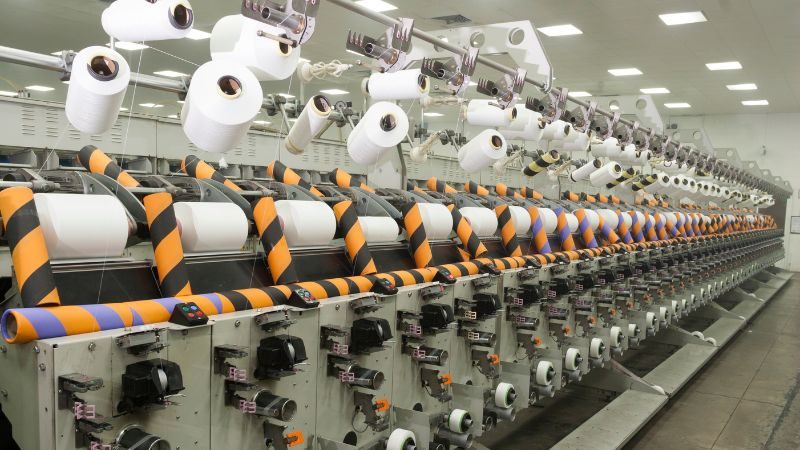
Natural rubber latex is used in rubber thread manufacturing because properly compounded and vulcanized natural rubber can provide high elasticity, flexibility, and elastic recovery.
Its important properties include:
-
Elasticity: Allows rubber thread to stretch under tension.
-
Elastic Recovery: Helps the thread return toward its original dimensions after stretching.
-
Flexibility: Supports repeated bending and stretching in textile applications.
-
Mechanical Performance: Suitable compounding and vulcanization can provide useful tensile properties for elastic thread.
These properties make natural rubber thread suitable for applications such as elastic bands, garment components, socks, underwear, and other textile products requiring stretch and recovery.
Final performance depends on the rubber formulation, thread dimensions, processing conditions, and vulcanization. Natural rubber also has limitations, including sensitivity to ozone and certain oils, while residual natural latex proteins may be relevant to allergy risk.
How Is Rubber Thread Manufactured from Natural Latex?
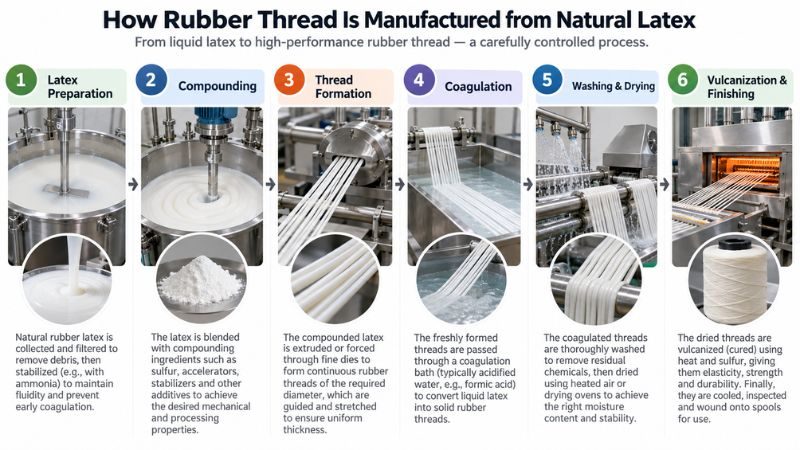
Rubber thread can be manufactured by forming compounded natural rubber latex into continuous filaments, followed by coagulation, washing, drying, and vulcanization.
A common latex extrusion process involves the following stages:
-
Latex Preparation: Concentrated natural rubber latex is received, inspected, and prepared for compounding.
-
Compounding: Vulcanizing agents, accelerators, stabilizers, and other required ingredients are incorporated into the latex.
-
Thread Formation: The prepared latex compound is passed through small openings to form continuous streams.
-
Coagulation: The latex streams enter a suitable coagulating medium, where the dispersed rubber particles form continuous rubber filaments.
-
Washing and Drying: The formed threads are washed to remove processing residues and dried under controlled conditions.
-
Vulcanization and Finishing: The rubber is cured to develop its required elastic and mechanical properties, then finished and inspected.
The exact process sequence, chemicals, and operating conditions depend on the manufacturer’s technology.
Latex rubber thread formation should not be confused with textile yarn covering, in which an existing elastic thread is wrapped with another fiber.
What Latex Specifications Matter for Rubber Thread Production?
Manufacturers should evaluate Natural Rubber Latex 60% DRC specifications before using the material for rubber thread production.
The following parameters help assess latex quality and processing suitability.
| Parameter | What It Measures | Why It Matters |
| DRC | Percentage of dry rubber in the latex |
Helps control rubber quantity and formulation calculations
|
| TSC | Total rubber and non-rubber solids |
Supports material consistency and solids balance
|
| MST | Resistance to mechanical destabilization under specified test conditions |
Helps evaluate the stability of concentrated latex during handling
|
| VFA | Indicator associated with volatile fatty acids formed during biological activity |
Helps assess preservation condition and changes in latex quality
|
| Ammonia | Ammonia associated with the latex preservation system |
Relevant to storage stability and formulation compatibility
|
| Coagulum | Amount of pre-coagulated rubber particles |
Important for filtration, cleanliness, and processing
|
| Viscosity / pH | Flow characteristics and chemical condition |
May affect mixing, material handling, and process adjustment
|
DRC, MST, VFA, and coagulum are useful quality indicators, but no single parameter determines whether a latex grade will produce acceptable rubber thread.
Additional properties, such as KOH number, sludge content, and trace metals, may be reviewed according to the manufacturer’s specifications and applicable standards.
Standards such as ISO 2004:2024 and ASTM D1076-23(2026) provide requirements for specified categories of natural rubber latex concentrate. Manufacturers should also establish application-specific acceptance criteria and evaluate actual production performance.
How to Choose the Right Latex Grade for Rubber Thread?
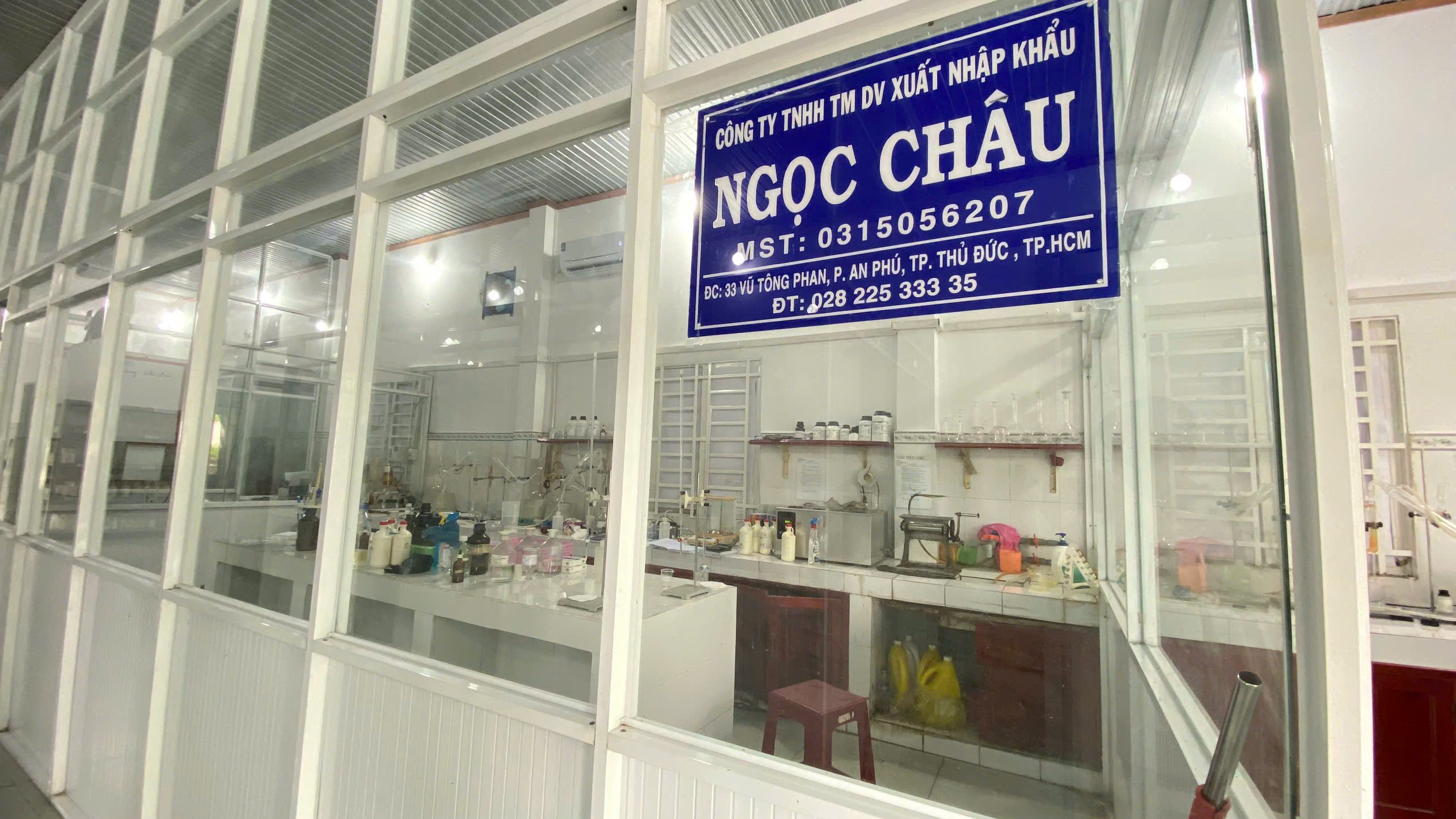
Choosing suitable latex for rubber thread production requires evaluating the preservation system, technical specifications, and compatibility with the manufacturing formulation.
Natural rubber latex concentrate is commercially available in grades distinguished by their ammonia preservation systems, including High Ammonia (HA), Medium Ammonia (MA), and Low Ammonia (LA) types.
High Ammonia Latex uses a higher ammonia level for preservation and may be suitable for manufacturing systems designed to handle this type of concentrate.
Other preservation systems may also be considered depending on the supplier’s formulation, the manufacturer’s processing requirements, and the performance demonstrated in trials.
Before selecting a grade, manufacturers should check:
-
The latex preservation system and ammonia content.
-
MST, coagulum, and other relevant quality indicators.
-
Compatibility with compounding ingredients.
-
Requirements for mixing, filtration, and thread formation.
-
Quality consistency between batches.
HA, MA, and LA should not be ranked solely by ammonia content. The appropriate choice depends on the complete latex specification and demonstrated compatibility with the production process.
What Should Manufacturers Check Before Buying Latex?
Before purchasing natural rubber latex for rubber thread, manufacturers should evaluate both the supplied material and its suitability for their production requirements.
| Item | What to Check |
| Technical Data Sheet |
Latex grade, preservation type, and declared specifications
|
| Batch COA |
Actual test results for the relevant production batch
|
| Preservation System |
Ammonia level and other preservatives, where applicable
|
| Batch Consistency |
Variation in important specifications between shipments
|
| Packaging & Handling |
Container cleanliness, protection against contamination, and suitable handling
|
| Storage Conditions |
Storage period, temperature, and preservation requirements
|
| Production Trial |
Mixing behavior, filtration, thread formation, and final product quality
|
A Certificate of Analysis (COA) helps verify reported material properties, but it does not replace production testing.
Manufacturers should confirm acceptance limits with their technical teams and evaluate representative samples before approving a new latex source.
Frequently Asked Questions
Can Natural Rubber Latex 60% DRC Be Used Directly to Make Rubber Thread?
Not normally. Concentrated natural rubber latex generally requires compounding and process adjustments before thread formation, coagulation, and vulcanization.
Is High Ammonia Latex Always Required for Rubber Thread?
No universal requirement has been established for all production systems. HA Latex may be suitable for certain processes, while other grades should be evaluated according to preservation chemistry and manufacturing requirements.
What Is the Difference Between Latex Rubber Thread and Spandex?
Latex rubber thread is made from rubber-based materials, commonly natural rubber latex. Spandex, also called elastane, is a synthetic polyurethane-based elastic fiber. Their processing methods and material properties differ.
Conclusion
Natural Rubber Latex 60% DRC is an important raw material for latex rubber thread manufacturing, but choosing suitable latex requires more than checking dry rubber content or ammonia grade.
Manufacturers should review technical specifications, assess batch consistency, and conduct production trials.
Ngoc Chau Natural Rubber supplies Natural Rubber Latex 60% DRC from Vietnam. Manufacturers can contact Ngoc Chau to discuss available latex grades, technical specifications, and supply requirements.
Hotline / Mobile: +84 762 798 888
Email: info@ngocchausupplier.com


 Ms Evan