

Contents
To recognize the differences of SVR 3L rubber, buyers should look beyond colour or surface appearance. SVR 3L is a technically specified natural rubber grade defined mainly by measurable limits such as dirt, ash, nitrogen, volatile matter, initial plasticity, PRI and Lovibond colour.
A light appearance can be a useful preliminary clue, but the grade should ultimately be verified against the applicable specification and test results.
What Is SVR 3L Rubber?
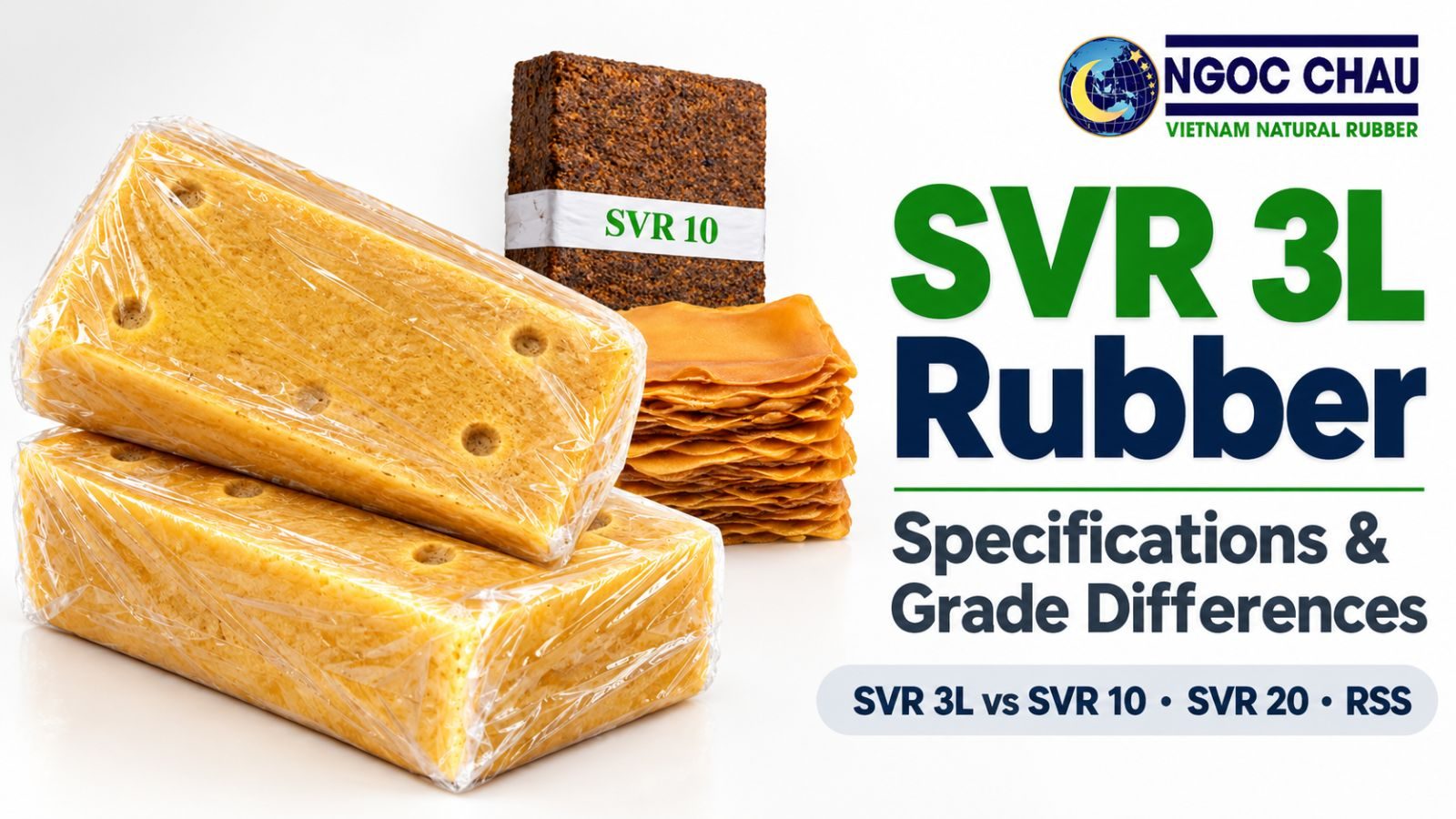
SVR 3L (also known as TSR 3L) is a premium Vietnamese natural rubber grade valued for its light color, low dirt content, and low volatile matter. It is widely selected by manufacturers who require high purity, consistent processing, and reliable mechanical performance in demanding applications such as premium tires, belts, hoses, and technical industrial goods.
It is commonly sourced from Vietnam manufacturers and suppliers by international buyers seeking technically specified rubber with consistent quality. In international markets, this grade is frequently traded under the term TSR 3L rubber in procurement documents and technical specifications.
Produced from selected natural latex and field coagulum, SVR 3L undergoes controlled cleaning, shredding, washing, drying, and baling processes to ensure stable quality. The grade complies with strict international specifications (ISO/TCVN) for dirt, ash, nitrogen, and volatile content, helping manufacturers achieve predictable performance and reduced production defects.
TSR 3L is the international terminology for technically specified rubber meeting equivalent quality parameters to SVR 3L.
How Can You Recognize SVR 3L Rubber?
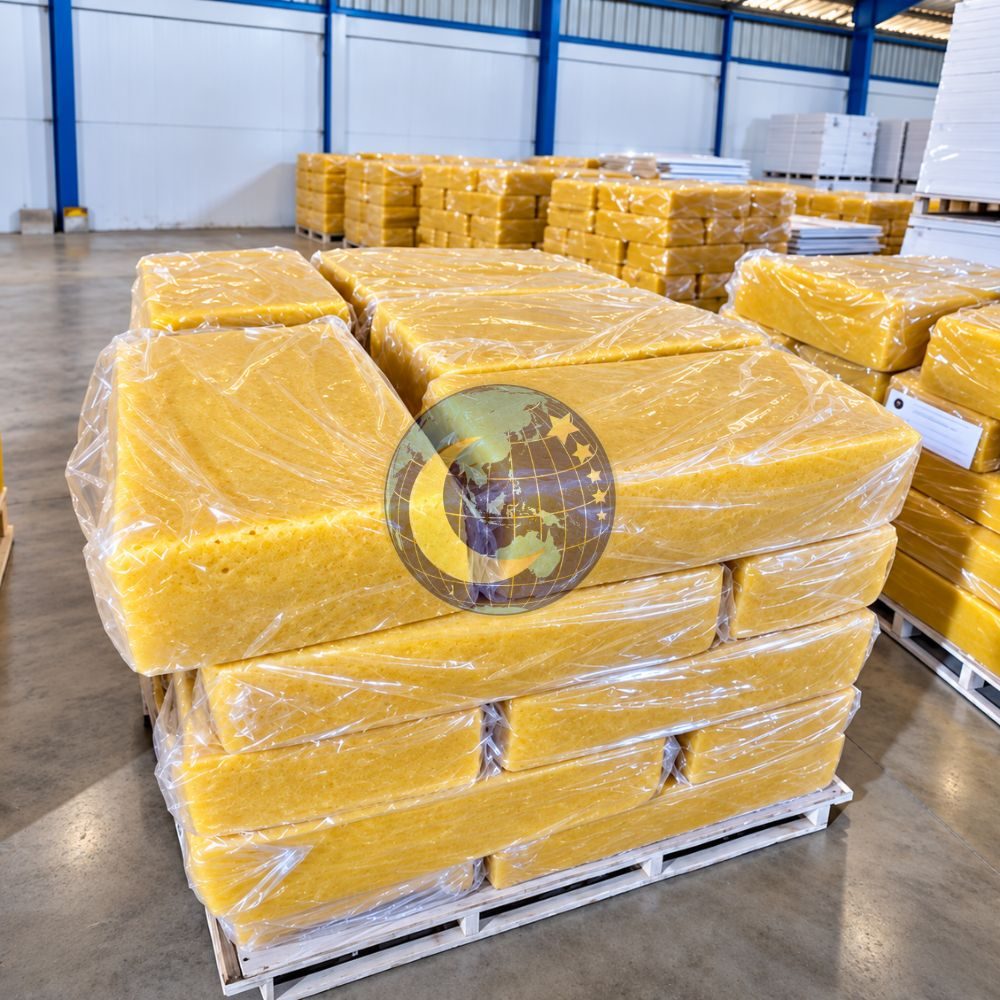
SVR 3L can be recognized through a combination of appearance, grade documentation and test results.
Typical preliminary indicators include:
- block rubber form;
- relatively light colour;
- visually clean and uniform appearance;
- grade identification in the accompanying documents.
However, appearance alone cannot confirm the grade.
A more reliable check should include:
- the declared grade;
- the applicable specification;
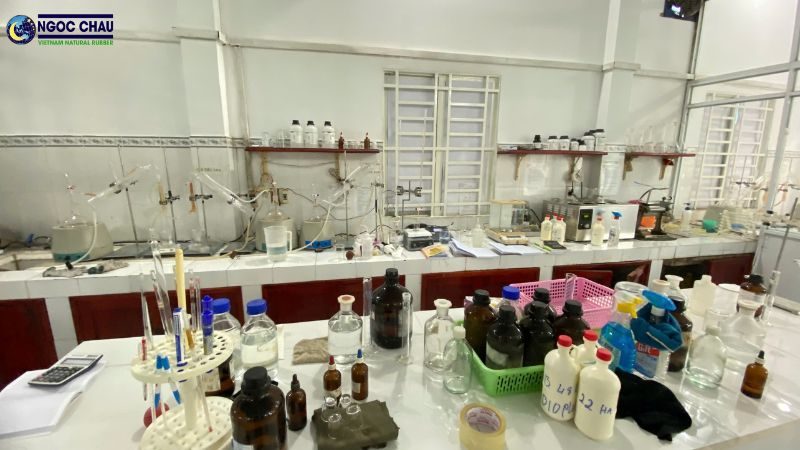
- laboratory results or batch COA;
- any additional buyer-specific requirements.
Can SVR 3L Be Identified by Colour Alone?
No.
Colour is only a preliminary indicator. It does not confirm whether the rubber meets the required dirt, ash, plasticity, PRI or other technical limits.
Grade verification should therefore rely on the applicable specification and test results.
SVR 3L Technical Specifications – TCVN 3769:2016
| Parameter | Limit | Test Method |
| Dirt content retained on sieve, % wt | 0.03 Max |
TCVN 6089 (ISO 249)
|
| Ash content, % wt | 0.50 Max |
TCVN 6087 (ISO 247)
|
| Nitrogen content, % wt | 0.60 Max |
TCVN 6091 (ISO 1656)
|
| Volatile matter, % wt | 0.80 Max |
TCVN 6088-1 (ISO 248-1)
|
| Initial Plasticity (P₀) | 35 Min |
TCVN 8493 (ISO 2007)
|
| Plasticity Retention Index (PRI) | 60 Min |
TCVN 8494 (ISO 2930)
|
| Lovibond Color Index, single sample | 6 Max |
TCVN 6093 (ISO 4660)
|
| Mooney Viscosity ML (1+4) 100°C | Not specified |
TCVN 6090-1 (ISO 289-1)
|
| Gel content, % wt | Not specified | ISO 17278 |
Note: “Not specified” means that no mandatory numerical limit is assigned to that parameter for SVR 3L in this specification table. Additional requirements may be agreed separately between buyer and supplier.
How to Recognize the Differences of SVR 3L Rubber
The clearest way to understand SVR 3L is to compare its specification with other common natural rubber grades.
SVR 3L vs SVR 10 vs SVR 20
| Parameter | SVR 3L | SVR 10 | SVR 20 |
| Dirt, % wt | 0.03 Max | 0.08 Max | 0.16 Max |
| Ash, % wt | 0.50 Max | 0.60 Max | 0.80 Max |
| Nitrogen, % wt | 0.60 Max | 0.60 Max | 0.60 Max |
| Volatile matter, % wt | 0.80 Max | 0.80 Max | 0.80 Max |
| Initial Plasticity, P₀ | 35 Min | 30 Min | 30 Min |
| PRI | 60 Min | 50 Min | 40 Min |
| Lovibond Color Index | 6 Max | Not specified | Not specified |
The main differences are in dirt content, P₀, PRI and colour requirements.
For example, the maximum dirt limit increases from:
- 0.03% for SVR 3L
- 0.08% for SVR 10
- 0.16% for SVR 20
PRI also differs:
- SVR 3L: 60 Min
- SVR 10: 50 Min
- SVR 20: 40 Min
These differences describe the grade requirements. They do not mean that one grade is suitable for every application. The correct choice depends on the compound and finished-product requirements.
SVR 3L vs RSS


SVR 3L and Ribbed Smoked Sheet (RSS) use different grading approaches.
| Aspect | SVR 3L | RSS |
| Product form | Block rubber |
Ribbed smoked sheet
|
| Main grading basis | Numerical technical parameters |
Mainly visual grading criteria
|
| Dirt | Defined numerical limit |
Foreign matter assessed through RSS grading requirements
|
| P₀ / PRI | Defined technical limits |
Not the primary visual grading basis
|
| Colour | Defined Lovibond limit |
Evaluated as part of sheet appearance
|
| Defects | Technical specification |
Mould, bubbles, bark, stains and smoking defects are assessed
|
The key difference is therefore not simply “better versus worse”.
SVR 3L is a technically specified block rubber, while RSS is a sheet rubber classified mainly through visual grading criteria and permitted defects.
Is SVR 3L the Same as TSR 3L?
TSR means Technically Specified Rubber, which is the broader international term for technically specified natural rubber.
SVR means Standard Vietnamese Rubber, Vietnam’s classification system for technically specified natural rubber.
The term “TSR 3L” may appear in international trade, but buyers should still confirm the applicable specification and acceptance limits rather than relying on the grade name alone.
How Can Buyers Verify SVR 3L Quality?
A practical verification process is:
- Confirm the declared grade – SVR 3L.
- Confirm the applicable standard – for example, TCVN 3769:2016.
- Check the mandatory specification limits.
- Review the batch COA or test result where available.
- Confirm additional buyer-specific requirements if necessary.
It is also important to distinguish between a grade specification and an actual batch result.
For example, a dirt result of 0.007% may describe one tested sample, while 0.03 Max is the applicable grade limit in the specification table.
FAQ
What is SVR 3L rubber?
SVR 3L is a Vietnamese technically specified natural rubber grade supplied in block form. It is defined by technical requirements such as dirt, ash, nitrogen, volatile matter, P₀, PRI and colour index.
How can you recognize SVR 3L rubber?
Appearance can provide preliminary clues, but reliable identification requires the declared grade, applicable specification and test results or COA.
What is the difference between SVR 3L and SVR 10 or SVR 20?
SVR 3L has different limits for parameters such as dirt, P₀, PRI and colour. For example, the maximum dirt limit is 0.03% for SVR 3L, compared with 0.08% for SVR 10 and 0.16% for SVR 20.
What is the difference between SVR 3L and RSS?
SVR 3L is technically specified block rubber evaluated using numerical parameters. RSS is ribbed smoked sheet rubber graded mainly through visual sheet criteria and permitted defects.
Is SVR 3L the same as TSR 3L?
SVR is Vietnam’s technically specified rubber classification, while TSR is the broader international terminology. Buyers should confirm the applicable technical standard and acceptance limits for each requirement.
Conclusion
To recognize the differences of SVR 3L rubber, buyers should rely primarily on technical specifications rather than colour or appearance alone.
SVR 3L differs from SVR 10 and SVR 20 mainly through parameters such as dirt, P₀, PRI and colour requirements, while its difference from RSS lies largely in the grading system.
For current test results, packing options and supply information, buyers can continue to the SVR 3L Natural Rubber Product Page.
Hotline / WhatsApp: +84 762 798 888
Email: info@ngocchausupplier.com


 Ms Evan