

Contents
- 1 How Do You Test the Quality of Natural Rubber Latex?
- 2 What Should You Check Before Buying Natural Rubber Latex?
- 3 What Should You Ask the Supplier Before Ordering?
- 4 Which Natural Rubber Latex Quality Parameters Should You Check?
- 5 Is 60% DRC Enough to Confirm Good Latex Quality?
- 6 What Should You Check When the Latex Arrives?
- 7 If the COA Passes, Why Verify the Latex Again?
- 8 Frequently Asked Questions
- 9 Conclusion
To test the quality of Natural Rubber Latex 60% DRC, start before you place the order, not only after the shipment reaches your factory.
A practical buyer should check three stages:
Before buying: Is this the right latex grade and specification for my production?
Before ordering: Have the buyer and supplier agreed on the quality requirements?
After arrival: Does the actual shipment still meet those requirements?
In simple terms:
Right Latex → Right Specification → Verify the Shipment
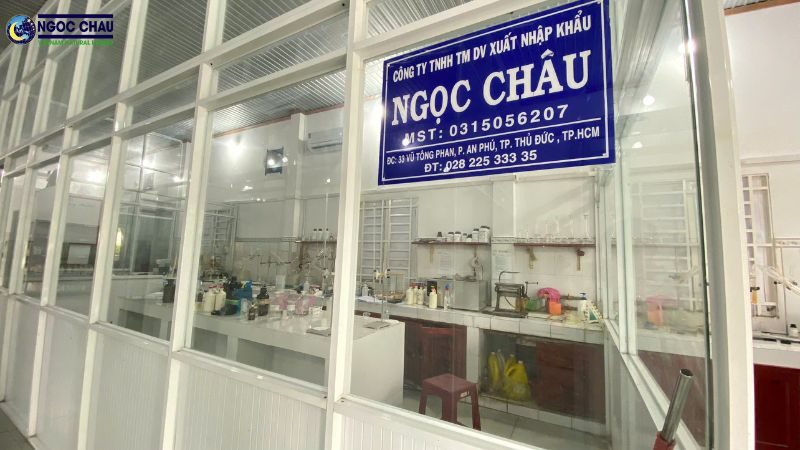
How Do You Test the Quality of Natural Rubber Latex?
Natural Rubber Latex quality should not be judged by one number alone.
A practical evaluation combines:
- Product suitability – Is the latex grade suitable for your application?
- Specification – Does the product meet the agreed technical requirements?
- COA – What are the actual test results for the supplied batch?
- Incoming inspection – Is the material still in acceptable condition when it reaches your factory?
For process-sensitive applications, buyers may also compare a new batch with previously approved material or conduct a controlled production trial.
What Should You Check Before Buying Natural Rubber Latex?
Before asking only:
“What is your price for Natural Rubber Latex 60% DRC?”
first define what your production actually needs.
Check:
- Application: gloves, latex thread, foam, adhesives, carpet or other rubber products
- Latex grade: HA, LA or another required grade
- Current specification: especially if your factory already has an approved material
- Important process requirements: such as viscosity, MST or ammonia level where relevant
- Packing: Flexibag, Steel Drum, IBC Tank or Jerry Can
- Expected transport and storage conditions
Two suppliers may both offer “Natural Rubber Latex 60% DRC”, but that does not automatically mean they are offering the same grade or specification.
Therefore:
Compare the complete product requirement, not only DRC and price.
What Should You Ask the Supplier Before Ordering?
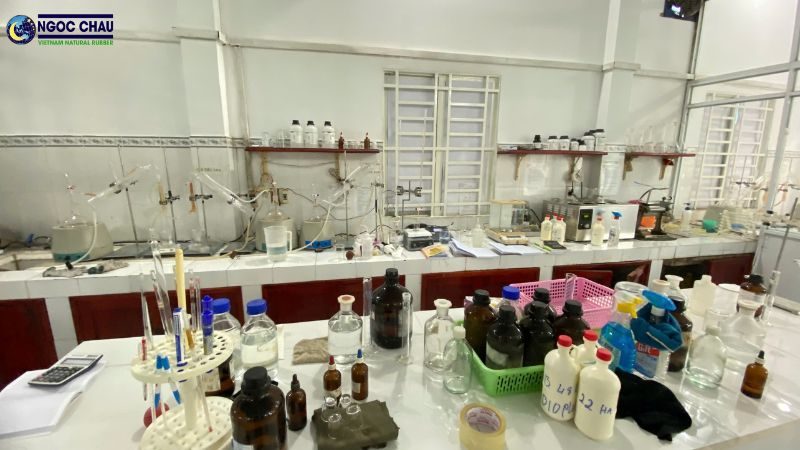
Before selecting a Natural Rubber Latex supplier, request enough information to understand exactly what is being offered.
A useful checklist includes:
- Product Specification
- Latex grade
- Recent or sample COA
- Preservation system
- Country of origin
- Packing options
- Loading quantity
- Applicable standard or test method
For a new supplier or a sensitive production process, a sample or controlled trial may also be useful before committing to a larger order.
Specification and COA are not the same
| Document | What It Tells You |
| Specification | What the latex is required to meet |
| COA | Actual test results for a specific batch |
| Incoming QC | What the buyer verifies after arrival |
Before confirming the order, buyer and supplier should clearly agree on the applicable specification and any important acceptance criteria.
International references such as ISO 2004 and ASTM D1076 can provide a useful basis for concentrated Natural Rubber Latex specifications.
The key supplier question is:
Can this supplier consistently provide the latex that my production process requires?
Price matters, but it should be compared together with specification, batch consistency, packing and logistics.
Which Natural Rubber Latex Quality Parameters Should You Check?
Buyers do not need to become laboratory specialists, but they should understand what the main quality parameters mean.
| Parameter | What It Tells the Buyer |
| DRC | Amount of actual dry rubber present |
| TSC | Total solids in the latex |
| MST | Resistance to mechanical destabilization |
| VFA | Supporting information about preservation and storage condition |
| Ammonia / Alkalinity | Condition of the preservation system |
| Viscosity | Flow and processing behaviour |
| Coagulum | Presence of partially coagulated material |
| Sludge | Settled insoluble material |
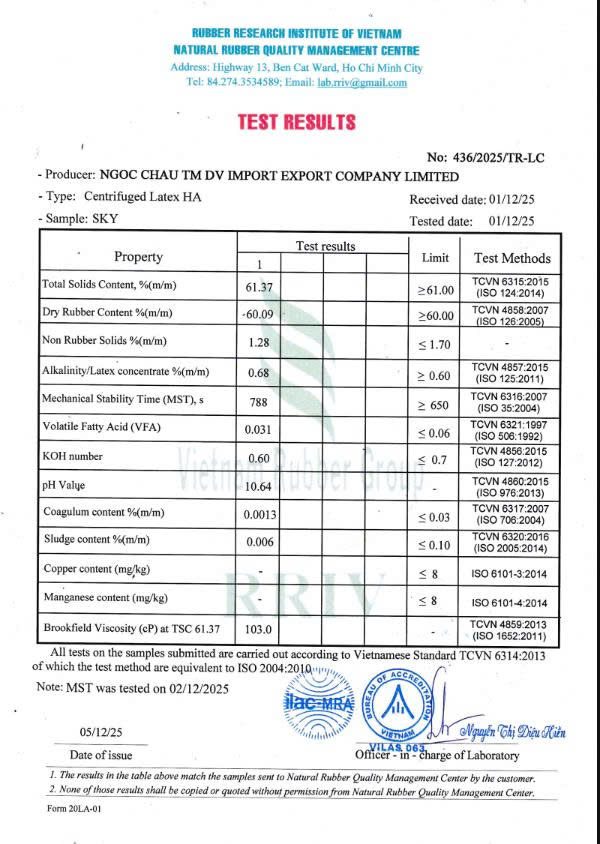
The important question is not simply:
“Is this value high or low?”
It is:
“Does this value meet the agreed specification and fit our production requirements?”
Is 60% DRC Enough to Confirm Good Latex Quality?
No.
DRC is one of the most important parameters when buying concentrated Natural Rubber Latex because it tells you how much dry rubber is present.
However:
DRC is a concentration parameter, not a complete quality score.
Two shipments may have similar DRC but still differ in:
- MST;
- VFA;
- viscosity;
- preservation condition;
- coagulum;
- processing behaviour.
Natural Rubber Latex is also a natural colloidal material. Raw-material variation, preservation, storage, temperature and handling history can influence how a batch behaves.
This is why two batches that meet the same basic specification may still show some difference in viscosity or processing behaviour.
The practical approach is:
Specification compliance + Batch consistency + Production experience
What Should You Check When the Latex Arrives?
When the shipment reaches your factory, verify four things before normal production release.
1. Confirm the Shipment
Check:
- latex grade;
- batch or lot number;
- packing;
- shipment documents;
- COA.
Make sure the material received is the material that was ordered.
2. Check the Physical Condition
Look for unusual:
- leakage or damaged packing;
- contamination;
- coagulum or lumps;
- discoloration;
- separation;
- odor or consistency.
Visual inspection does not replace laboratory testing, but it can identify a shipment that needs further investigation.
3. Take a Representative Sample
Laboratory results are only useful when the sample represents the shipment.
Sampling should therefore follow the buyer’s approved QC procedure or an applicable standardized method.
4. Compare the Results
Compare the incoming results with:
- the agreed specification;
- the supplier’s COA;
- previous approved batches, where useful.
Historical comparison can be particularly useful for parameters such as viscosity, MST or VFA.
If the COA Passes, Why Verify the Latex Again?
A supplier’s COA shows the test results for the batch during the supply process.
The buyer receives the same material after it may have experienced:
- storage;
- container loading;
- ocean or inland transportation;
- temperature changes;
- unloading;
- pumping and handling.
Incoming QC therefore answers a different question:
Is the material still in acceptable condition when it reaches my factory?
This does not mean that the supplier’s COA is unreliable.
Supplier COA and buyer incoming QC complement each other.
Incoming verification is especially useful for:
- new suppliers;
- new latex grades;
- long-distance shipments;
- extended storage;
- sensitive production processes;
- shipments with unusual appearance or test results.
Quick Buyer Checklist
| Stage | What to Check |
| Before inquiry |
Application + required latex grade
|
| Supplier evaluation |
Specification + COA + consistency
|
| Compare suppliers |
Quality + price + packing + logistics
|
| Before PO |
Agree specification and acceptance criteria
|
| Before shipment |
Check the batch COA
|
| On arrival |
Check packing and latex condition
|
| Incoming QC |
Representative sampling + required tests
|
| Before production |
Compare specification, COA and previous batches
|
If everything meets the agreed requirements and there is no unexplained abnormality, the batch can proceed according to the buyer’s normal release procedure.
If results are questionable:
Hold → Retest → Compare With Supplier → Trial if necessary
Frequently Asked Questions
1. How do you test the quality of Natural Rubber Latex?
Start by confirming the correct latex grade and specification. Review the supplier’s COA, then inspect and test the shipment when it arrives. Incoming results should be compared with the agreed specification and, where useful, previous approved batches.
2. Is 60% DRC enough to confirm good Natural Rubber Latex quality?
No. DRC shows how much dry rubber is present, but it does not fully describe mechanical stability, preservation condition, viscosity, coagulum or production behaviour.
3. What should I ask a Natural Rubber Latex supplier before buying?
Ask for the product specification, latex grade, recent or sample COA, preservation system, origin, packing, loading quantity and applicable technical standard or test method.
4. What is the difference between a specification and a COA?
A specification defines what the product is required to meet. A COA shows the actual measured results for a specific production batch or shipment.
5. Should Natural Rubber Latex be tested again when it arrives?
For many industrial buyers, incoming verification is useful because the material has experienced storage, transport and handling after the supplier’s original testing. The exact test plan should follow the buyer’s QC procedure.
Conclusion
A practical way to test the quality of Natural Rubber Latex is to start before the container arrives:
Choose the right grade → Agree the specification → Review the COA → Verify the shipment → Confirm before production.
If you are evaluating Natural Rubber Latex 60% DRC, share your application, current specification or target parameters with Ngoc Chau Natural Rubber. We can discuss the suitable grade and packing option before you place an order.
- Hotline / Mobile: +84 762 798 888
- Email: info@ngocchausupplier.com
- Website: www.ngocchausupplier.com


 Ms Evan