

Contents
RSS 1 vs RSS 3 mainly differs in visual grading tolerance. RSS 1 has stricter requirements for visible defects, while RSS 3 allows a wider range of minor blemishes, small bubbles, bark specks and limited dry mold or rust.
RSS 1 is a higher visual grade, but it is not automatically the better choice for every rubber compound. Buyers should choose according to their approved specification, process requirements and target cost.
RSS 1 vs RSS 3: Quick Comparison
| Factor | RSS 1 | RSS 3 |
| Rubber type | Ribbed Smoked Sheet |
Ribbed Smoked Sheet
|
| Grade basis | Visual grading | Visual grading |
| Visual tolerance | Stricter | Wider |
| Colour blemishes | More restricted |
Slight blemishes may be accepted
|
| Bubbles | Small scattered pinhead bubbles only |
Small bubbles may be accepted
|
| Bark specks | More restricted |
Slight small bark specks may be accepted
|
| Dry mold / rust | Very limited |
Slight traces may be accepted within grade limits
|
| Oxidized / burnt sheets | Not accepted | Not accepted |
| Price positioning | Usually higher |
Usually more economical
|
| Typical choice | Tighter visual requirement |
Standard Grade 3 requirement
|
Main takeaway: RSS 1 is selected under tighter visual criteria. RSS 3 allows more minor visual imperfections but still needs to meet the condition requirements of its grade.
Main Visual Grading Differences
RSS 1 and RSS 3 are primarily visually graded natural rubber sheets.
The practical differences are mainly found in:
- mold and rust tolerance;
- small bubbles;
- colour blemishes;
- bark specks;
- overall sheet appearance;
- unacceptable defects such as oxidation, burning or improper curing.
RSS 1
Generally applies tighter visual acceptance:
- very limited dry mold;
- only small scattered pinhead bubbles;
- fewer visible blemishes;
- tighter appearance consistency.
RSS 3
Allows slightly wider visual tolerance:
- slight dry mold or rust may be accepted within grading limits;
- small bubbles may be accepted;
- slight colour blemishes may be accepted;
- slight small bark specks may be accepted.
Both grades still reject serious sheet-condition problems such as oxidized, excessively heated, under-cured, over-smoked or burnt sheets.
Buyer note
RSS grades should not be defined only by laboratory values such as Dirt, Ash, PRI or Mooney.
Buyers may request laboratory testing or COA separately, but those values are additional technical requirements rather than the sole definition of RSS 1 or RSS 3.
Which Should You Choose: RSS 1 or RSS 3?
The correct question is not simply:
“Which grade is better?”
It is:
“Which grade meets my approved specification?”
Consider RSS 1 when:
- your specification requires RSS 1;
- tighter visual cleanliness is important;
- the material has already been qualified as RSS 1;
- fewer visible imperfections are required.
View RSS 1 Natural Rubber from Vietnam for grade assessment, sample test results, packing and sourcing details.
Consider RSS 3 when:
- RSS 3 is already accepted in your compound;
- wider visual tolerance is acceptable;
- standard industrial requirements are met;
- cost efficiency is important.
View RSS 3 Natural Rubber from Vietnam for visual grading, sample test results, packing and quotation information.
Higher visual grade does not automatically mean better performance in every compound.
Can RSS 3 Replace RSS 1?
Not automatically.
Before changing from RSS 1 to RSS 3, buyers should check:
- raw-material specification;
- compound formulation;
- visual acceptance criteria;
- processing conditions;
- finished-product requirements;
- customer approval;
- trial results.
If an existing product has already been qualified with RSS 1, a trial or technical review is recommended before changing grade.
RSS 1 vs RSS 3 Applications
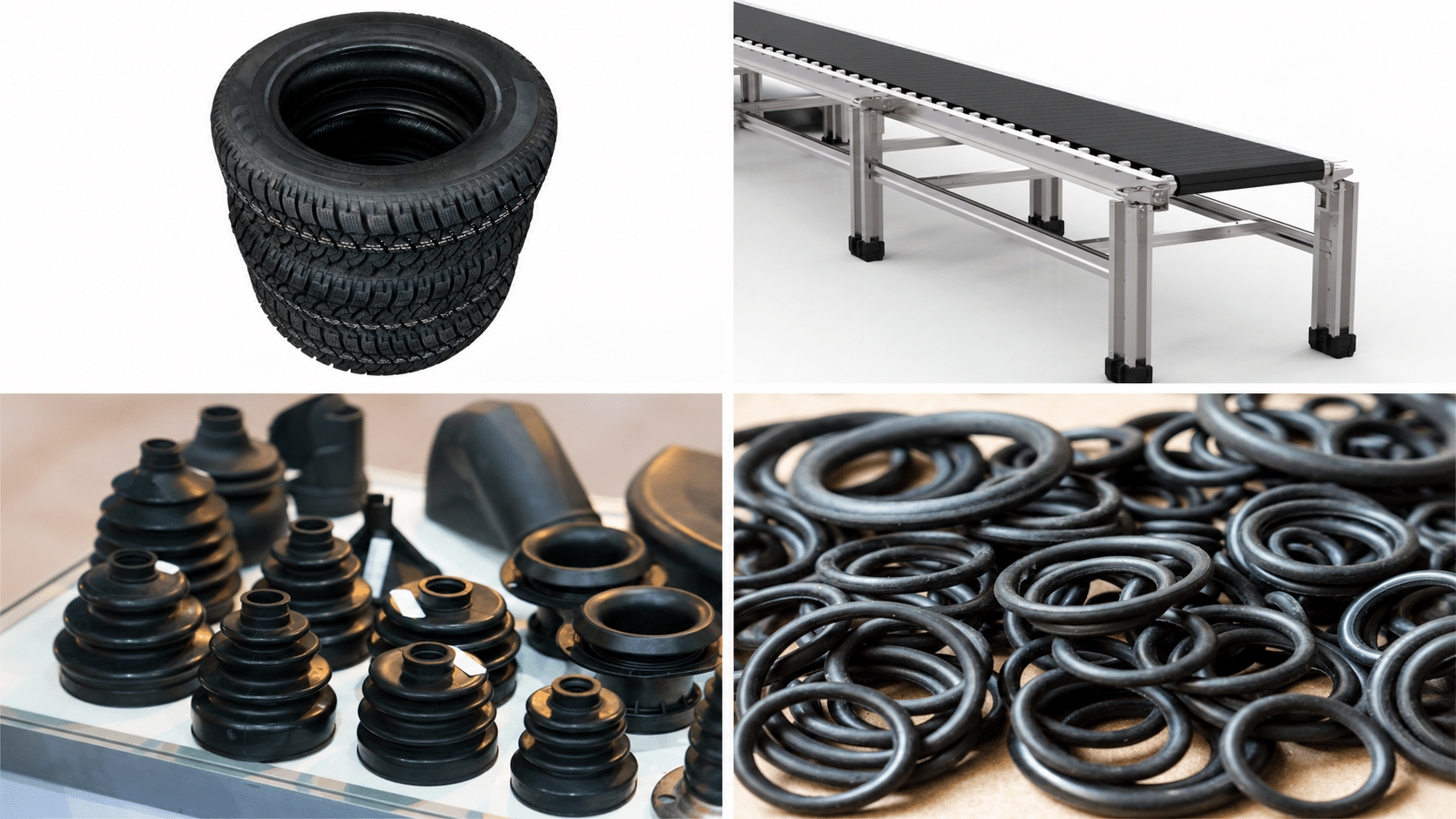
Both grades may be used in natural-rubber compounds for applications such as:
| Application |
What the buyer should check
|
| Tires |
Approved grade in the compound
|
| Conveyor belts |
Raw-material specification
|
| Hoses |
Processing and product requirement
|
| Rubber parts |
Compound and visual acceptance
|
| Seals & gaskets |
Approved material specification
|
| Footwear |
Performance requirement and cost target
|
Avoid selecting RSS 1 or RSS 3 only from the application name.
The approved formulation and buyer specification should remain the main decision basis.
RSS 1 vs RSS 3 Price
RSS 1 is generally priced above RSS 3 because tighter visual sorting is required.
However, the actual price depends on:
- market conditions;
- origin;
- quantity;
- shipment month;
- packing;
- Incoterm;
- destination port;
- inspection and document requirements.
This is particularly relevant because Google Search Console already shows the page appearing for RSS1 rubber price and other RSS price-related searches.
For an accurate comparison, request both RSS 1 and RSS 3 quotations for the same quantity, packing and destination.
Packing & Container Loading
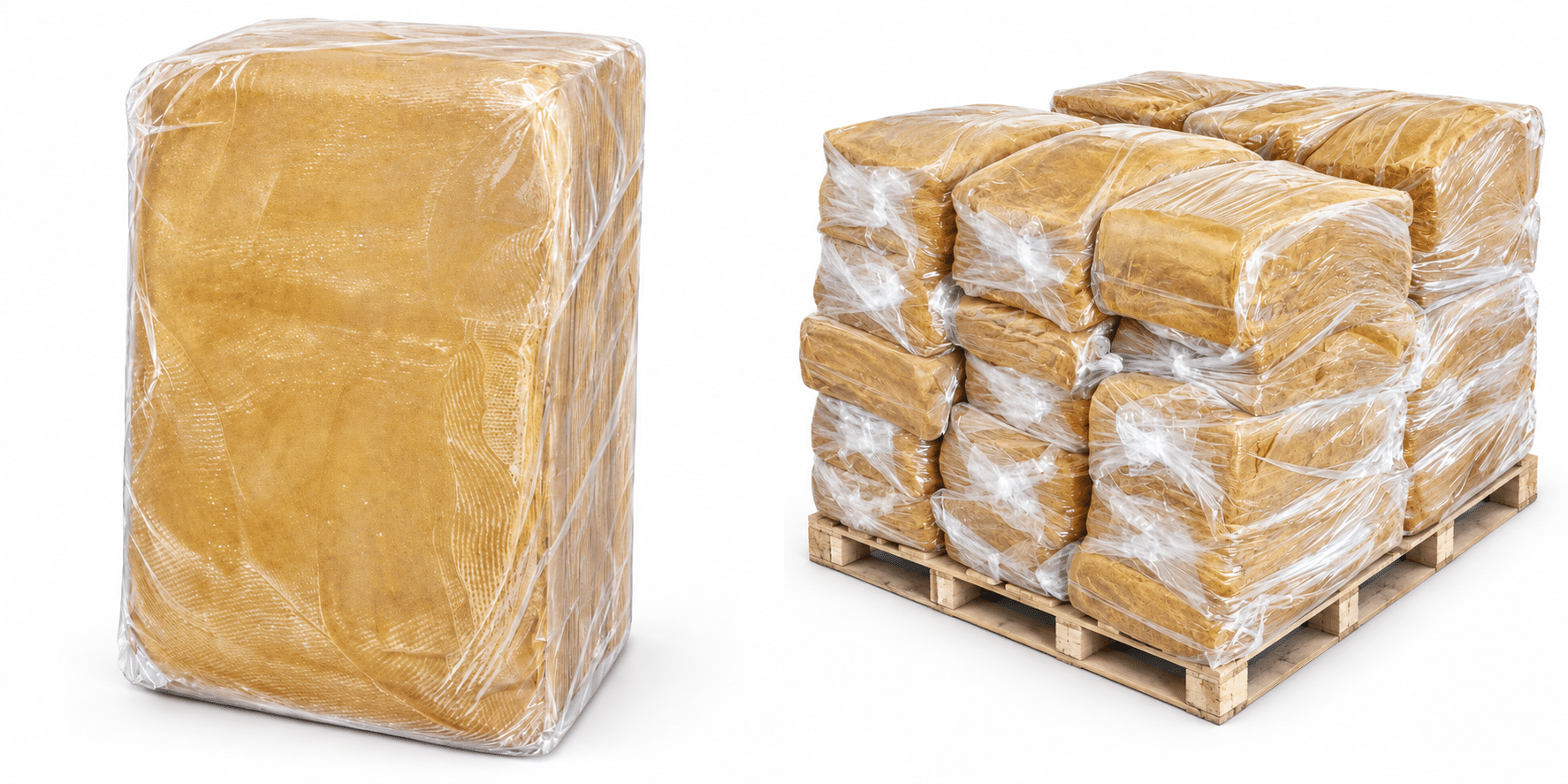
RSS 1 and RSS 3 can generally be supplied using the same common export packing configurations.
| Bale weight | Loose bales | Palletized bales |
| 33.33 kg | Approx. 600–630 bales/container; 20–21 MT |
36 bales/pallet × 16 pallets = 576 bales; approx. 19.2 MT/container
|
| 35 kg | Approx. 600–630 bales/container; 21–22.05 MT |
36 bales/pallet × 16 pallets = 576 bales; approx. 20.16 MT/container
|
These loading references are consistent with the earlier RSS 1 and RSS 3 product content.
Final loading should be confirmed for each shipment.
What Buyers Should Check Before Ordering
Before requesting a quotation, prepare:
- Grade: RSS 1 or RSS 3
- Quantity: MT
- Destination port
- Packing: loose bale or pallet
- Bale weight: 33.33 kg or 35 kg
- Incoterm: FOB / CFR / CIF
- Visual requirement
- Additional laboratory requirements, if any
- Required documents: COA, C/O and shipping documents
If you are unsure whether RSS 1 or RSS 3 matches your current formulation, send the existing specification for review.
FAQ
What is the main difference between RSS 1 and RSS 3?
RSS 1 has tighter visual grading requirements. RSS 3 allows a wider level of minor visual imperfections such as slight blemishes, small bubbles and limited bark specks.
Is RSS 1 better than RSS 3?
RSS 1 is a higher visual grade, but it is not automatically better for every compound. The correct grade depends on the buyer’s specification and qualification.
Can RSS 3 replace RSS 1?
Possibly, but not automatically. The buyer should review the formulation, specification, production requirements and approval process before substitution.
Is RSS 1 more expensive than RSS 3?
Usually yes, because RSS 1 requires tighter grading and sorting. The actual price difference changes with the market and shipment conditions.
Are RSS grades based on Dirt, Ash and PRI?
RSS 1 and RSS 3 are primarily visual grades. Laboratory parameters can be tested separately when required by the buyer.
Do RSS 1 and RSS 3 use the same packing?
They can generally use similar export packing such as 33.33 kg or 35 kg bales, either loose or palletized.
Conclusion
RSS 1 vs RSS 3 is mainly a difference in visual grading tolerance.
- RSS 1: tighter visual criteria.
- RSS 3: wider tolerance for minor visual imperfections and generally more economical.
- Neither grade should be selected only because its number is higher or lower.
The correct choice should follow the buyer’s specification, compound requirement and approved production standard.
Buyers who already know the required grade can continue to the RSS 1 Natural Rubber or RSS 3 Natural Rubber product page for detailed packing, sample test results and quotation information.
Hotline / WhatsApp: +84 762 798 888
Email: info@ngocchausupplier.com


 Ms Evan