

Contents
- 1 What Is the Main Material for Latex Gloves?
- 2 Why Is Natural Rubber Latex Used for Gloves?
- 3 How Is Natural Rubber Latex Used in Glove Manufacturing?
- 4 What Latex Specifications Should Glove Manufacturers Check?
- 5 Natural Rubber Latex vs Nitrile and Vinyl
- 6 Sourcing Natural Rubber Latex 60% DRC from Vietnam
- 7 Frequently Asked Questions
The main material for latex gloves is natural rubber latex, a milky liquid obtained from the Hevea brasiliensis rubber tree. Glove manufacturers commonly use concentrated Natural Rubber Latex 60% DRC, which is compounded with additives and processed into flexible gloves through dipping and vulcanization.
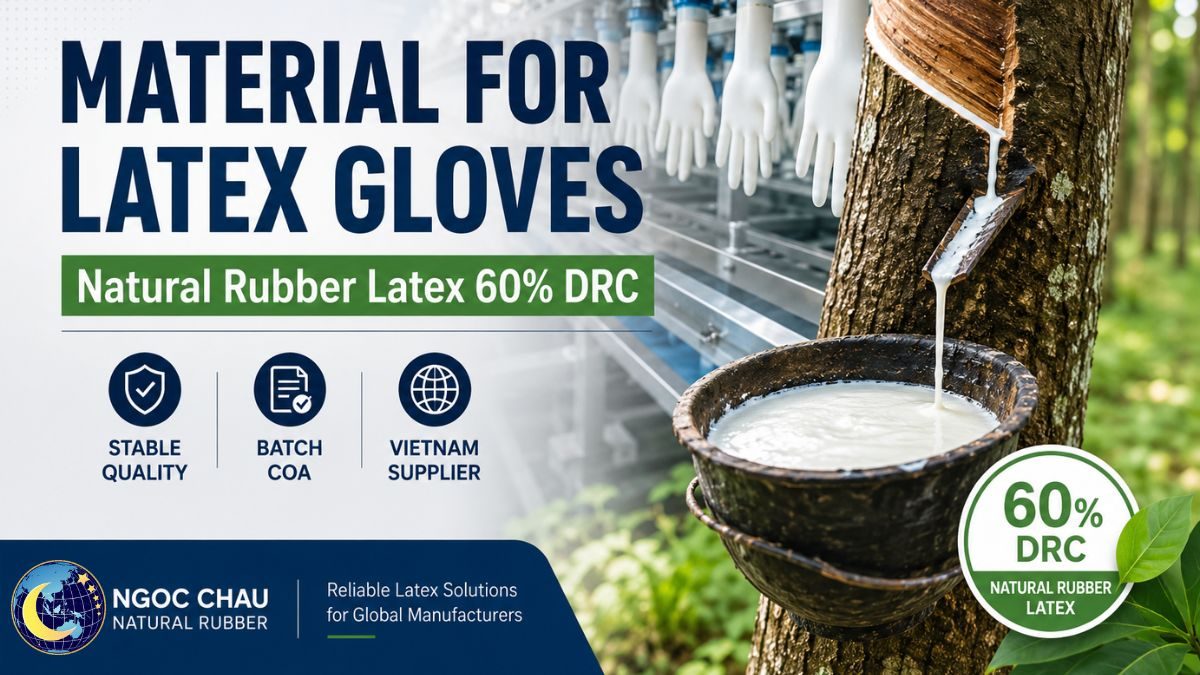
What Is the Main Material for Latex Gloves?
Latex gloves are primarily made from natural rubber latex, combined with processing additives that help form and strengthen the rubber film.
The main materials used in production include:
- Natural rubber latex: The primary rubber material that forms the glove.
- Vulcanizing agents: Help develop rubber strength and elasticity.
- Accelerators and activators: Support the vulcanization process.
- Stabilizers and antioxidants: Help maintain processing stability and resist degradation.
- Coagulants: Help form the rubber film on hand-shaped molds during dipping.
Natural Rubber Latex 60% DRC is a concentrated raw material containing approximately 60% dry rubber by mass, with the remainder consisting of water and non-rubber substances.
It is not a ready-to-use dipping compound. Before glove manufacturing, the latex is typically compounded and adjusted to meet the factory’s processing requirements.
Why Is Natural Rubber Latex Used for Gloves?
Natural rubber latex is widely used in glove manufacturing because of its excellent elasticity, flexibility, and film-forming properties.
Its main advantages include:
- Elasticity: Allows gloves to stretch and return close to their original shape.
- Comfort and fit: Provides a flexible rubber film that fits the hand closely.
- Tactile sensitivity: Helps users handle instruments and small objects with precision.
- Mechanical strength: Properly formulated and vulcanized rubber can provide good tensile and tear resistance.
These properties make natural rubber latex suitable for medical examination gloves, surgical gloves, household gloves, and various industrial applications.
However, natural rubber latex contains proteins that may cause allergic reactions in sensitive individuals. Its resistance to certain oils, solvents, and chemicals is also limited, so glove selection should match the intended use.
How Is Natural Rubber Latex Used in Glove Manufacturing?
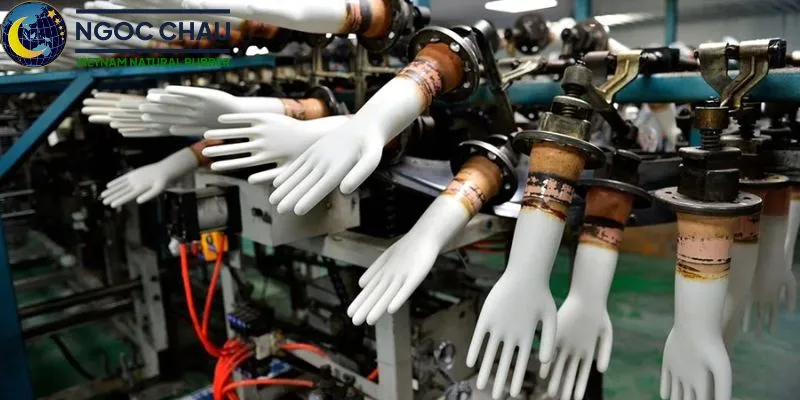
Concentrated natural rubber latex must be prepared and compounded before it is used to manufacture gloves.
A typical latex glove manufacturing process includes five main stages:
- Latex preparation: Concentrated latex is received, inspected, and prepared for production.
- Compounding: Vulcanizing agents, accelerators, and other additives are mixed into the latex to prepare the dipping compound.
- Coagulant dipping: Clean hand-shaped formers are typically treated with a coagulant and then dipped into compounded latex to form a rubber film.
- Leaching and vulcanization: Leaching helps reduce water-soluble proteins and residual processing chemicals, while vulcanization develops the rubber film’s strength and elasticity.
- Finishing and testing: Gloves are dried, stripped, inspected, and tested before packaging.
The exact sequence may vary depending on the manufacturer’s equipment and production process.
The quality of the material for latex gloves is important, but finished-glove performance also depends on compounding, dipping conditions, vulcanization, and quality control.
What Latex Specifications Should Glove Manufacturers Check?
When sourcing material for latex glove, manufacturers should evaluate several technical parameters rather than relying on Dry Rubber Content alone.
| Parameter | Why It Matters |
| DRC – Dry Rubber Content |
Measures the dry rubber content by mass
|
| TSC – Total Solids Content |
Measures total rubber and non-rubber solids
|
| MST – Mechanical Stability Time |
Indicates latex stability under a specified mechanical agitation test
|
| VFA – Volatile Fatty Acid Number |
Helps assess latex deterioration associated with microbial activity
|
| Ammonia Content |
Supports latex preservation during storage and transport
|
| pH |
Helps evaluate preservation conditions and processing compatibility
|
| Coagulum Content |
Indicates partially coagulated material that may affect processing
|
Glove manufacturers should compare the supplier’s Technical Specification and batch Certificate of Analysis (COA) with their factory’s approved raw material requirements.
High Ammonia (HA) Latex is commonly requested for glove manufacturing where higher ammonia preservation is suitable. Low Ammonia (LA) or other grades may also be used, depending on the factory’s approved formulation, preservation system, and processing requirements.
No single parameter, including DRC, determines the quality of finished gloves.
Natural Rubber Latex vs Nitrile and Vinyl
Natural rubber latex, nitrile, and vinyl are different glove materials, each suited to particular applications.
| Material | Main Characteristics |
Key Consideration
|
| Natural Rubber Latex | Excellent elasticity, close fit, and tactile sensitivity |
May cause natural latex allergy
|
| Nitrile Rubber | Synthetic rubber with good puncture resistance and resistance to many chemicals |
Chemical compatibility depends on formulation and exposure
|
| Vinyl (PVC) | Synthetic material commonly used in lower-demand applications |
Generally less elastic and durable
|
Natural rubber latex is often preferred when flexibility, comfort, and tactile sensitivity are important.
Nitrile or other suitable synthetic alternatives may be selected when natural rubber latex allergy or specific chemical exposure is a concern.
The final choice should depend on the intended application and required glove performance.
Sourcing Natural Rubber Latex 60% DRC from Vietnam
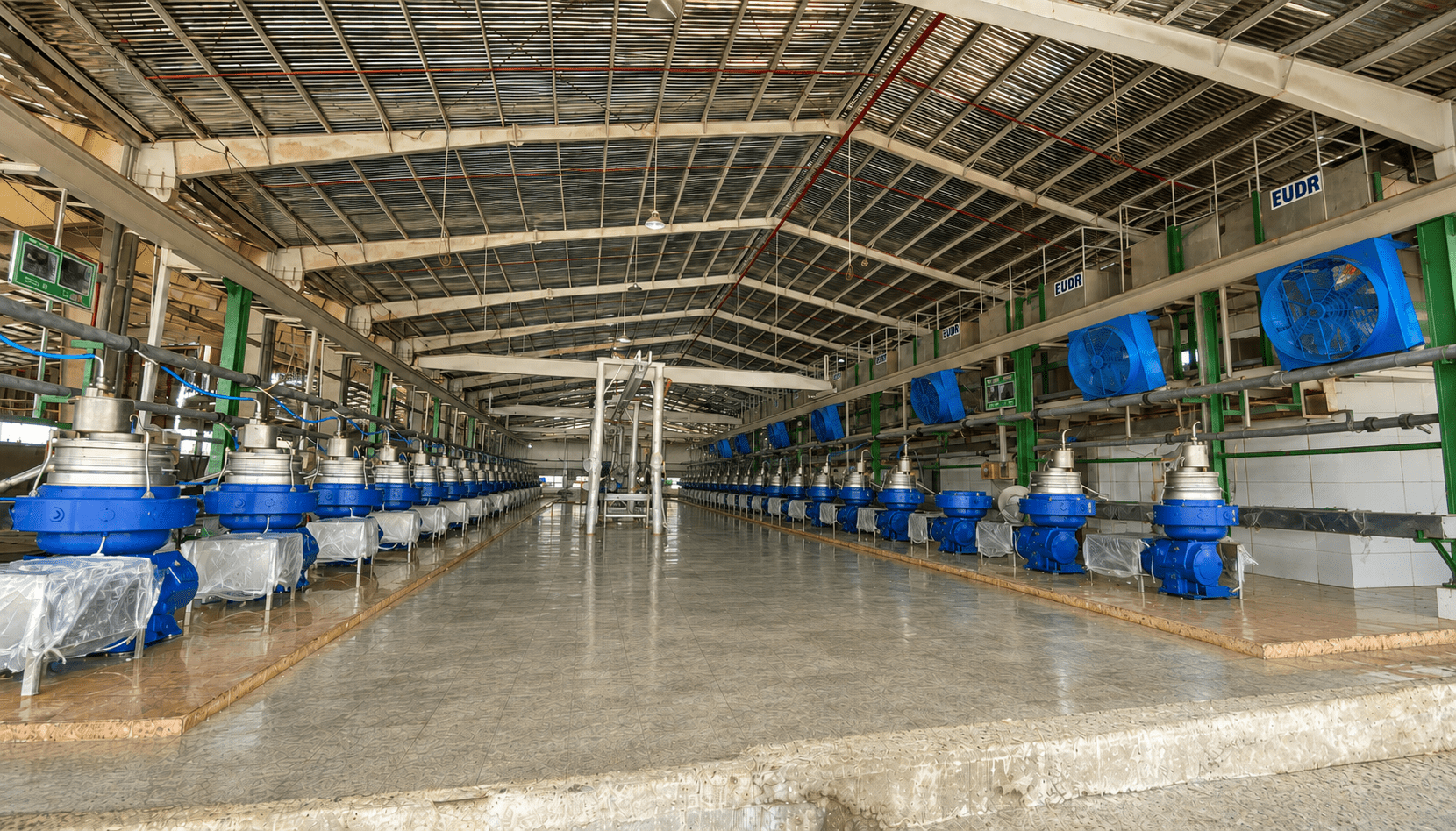
When selecting a reliable material for latex gloves, manufacturers should consider technical suitability, material consistency, and supplier reliability.
Before ordering, buyers should confirm:
- Required latex grade: HA, MA, or LA
- Technical Specification and batch COA
- Packing method and unloading requirements
- Order quantity and delivery schedule
- Compatibility with the factory’s approved formulation
Ngoc Chau Natural Rubber supplies Natural Rubber Latex 60% DRC from Vietnam for glove and other latex-based manufacturers.
Available packing options include Flexibag, Steel Drum, IBC Tank, and Jerry Can, depending on shipment and handling requirements.
If your factory is looking for a natural rubber latex supplier in Vietnam, contact Ngoc Chau Natural Rubber with your required grade, monthly volume, packing preference, and destination port to request technical specifications and a quotation.
Frequently Asked Questions
Is Natural Rubber Latex 60% DRC ready for direct glove dipping?
No. Concentrated natural rubber latex generally requires compounding and preparation before use in glove manufacturing. It is not the same as a ready-to-use dipping compound.
Can High Ammonia Latex be used for medical gloves?
High Ammonia Latex may be used as a raw material for medical glove manufacturing when it meets the factory’s approved specifications and processing requirements. Finished medical gloves must independently meet applicable safety, performance, and regulatory requirements.
Hotline / Mobile: +84 762 798 888
Email: info@ngocchausupplier.com


 Ms Evan