

Contents
At Ngoc Chau Natural Rubber, the RSS 3 rubber production process follows a fully standardized ribbed smoked sheet workflow designed for industrial consistency. Through controlled coagulation, precision milling, multi-stage washing, and carefully monitored smokehouse drying, we produce RSS 3 sheets with high cleanliness, stable tensile performance, and reliability across long production runs. This process-first approach ensures manufacturers receive uniform material quality that supports predictable mixing, compounding, and downstream processing.
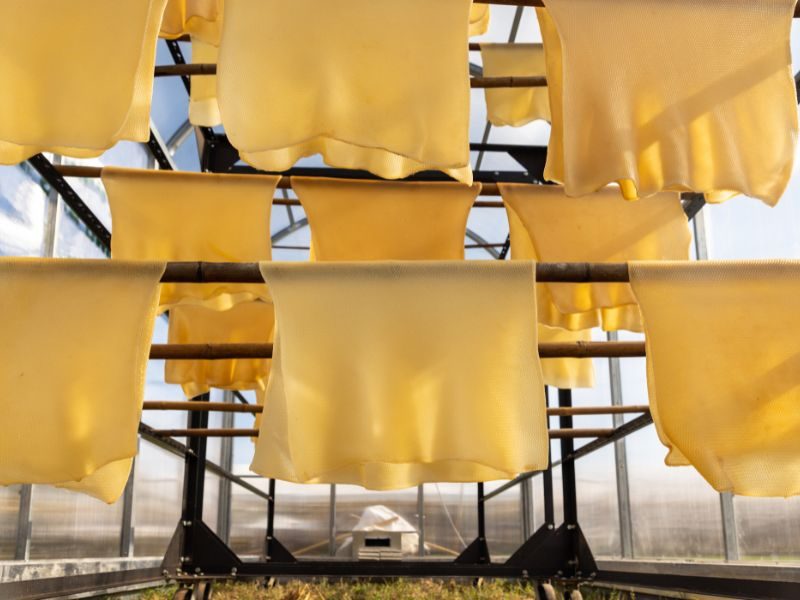
What Is Ribbed Smoked Sheet 3 (RSS 3)?
Ribbed Smoked Sheet 3 (RSS 3) is an internationally recognized mid-grade sheet rubber produced from high-quality field latex that has been coagulated, mechanically ribbed, and smoke-dried under controlled conditions. It adheres to strict physical and visual criteria defined in the Green Book and TCVN 3769:2016, allowing minor natural imperfections while maintaining strong mechanical properties.
As a versatile form of natural rubber widely referenced in global technical documentation, RSS 3—also known as RSS rubber or natural rubber RSS3—is valued for its balanced combination of elasticity, tensile strength, and cost-performance ratio. Its stable behavior under varying temperature and humidity conditions makes it a preferred raw material for tire compounds, industrial rubber goods, footwear applications, and automotive components.
RSS Grades Explained (RSS1 → RSS5) — Why RSS 3 Is the Industry Standard
Ribbed Smoked Sheets (RSS) are categorized into five grades—RSS1 to RSS5—based on visual quality, cleanliness, color consistency, and the presence of natural imperfections such as bark specks, air bubbles, stains, or mold. While premium grades like RSS1 are prized for purity, and lower grades like RSS5 offer economic value, RSS 3 stands as the most widely used and globally traded grade due to its ideal balance of quality, strength, and cost-efficiency. This makes RSS 3 the benchmark material for industrial rubber manufacturing.
These grades are also grouped in industry usage under the term “RSS sheet,” reflecting their shared production method and specifications.
RSS1 – Premium, High-Purity Grade
The highest-quality grade with excellent cleanliness and minimal visual defects. RSS1 is used in applications requiring strict purity and superior mechanical performance, such as precision-engineered parts and specialty technical rubber goods.
RSS2 – High-Grade Industrial Rubber
Slightly more imperfections are allowed compared to RSS1, but RSS2 still maintains strong tensile properties. It is used in high-quality footwear, specialized hoses, and selected tire compounds.
➡️ RSS3 – The Global Standard for Industrial Rubber Manufacturing
RSS 3 is the most widely traded and most demanded RSS grade worldwide.
It allows small natural imperfections while still meeting strict mechanical strength and durability standards. Its balance of purity, tensile strength, and price competitiveness makes it the preferred material for:
-
Passenger car and truck tires
-
Industrial and hydraulic hoses
-
Conveyor belts and rubberized fabrics
-
Automotive components
-
General-purpose industrial rubber goods
Because of its consistency, stable supply, and versatility, RSS 3 is the backbone of the global rubber industry.
RSS4 – General-Purpose Rubber Grade
RSS4 contains more visible imperfections such as stains and bubbles, making it suitable for less demanding applications where aesthetic appearance is not critical.
RSS5 – Economical, Low-Purity Grade
The lowest grade, allowing the highest level of impurities. RSS5 is ideal for budget-focused applications and products with minimal quality requirements.
Step-by-Step Production Process of RSS 3 Natural Rubber
The ribbed smoked sheet manufacturing process includes latex collection, controlled coagulation, mechanical rolling, smokehouse drying, and final grading. This full workflow is often described in practice as the rubber sheet production process.
Below is the full step-by-step breakdown:
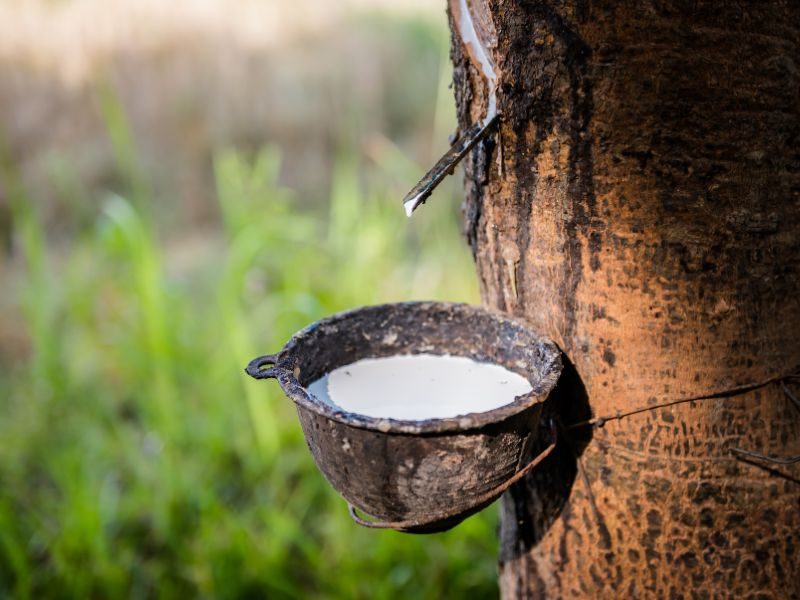
Step 1 – Latex Collection from Hevea Brasiliensis
The journey begins with fresh natural latex tapped from Hevea brasiliensis trees on certified plantations. At Ngoc Chau, we only use latex from sustainable sources with strict control over impurities.
-
Freshness is critical. Latex is collected daily and transferred immediately to our processing facility.
-
Quality starts here. We check pH, ammonia levels, and DRC (Dry Rubber Content) before moving forward.
This stage forms the foundation of natural rubber production and ensures consistency from the very first step.
Step 2 – Coagulation and Sheet Formation
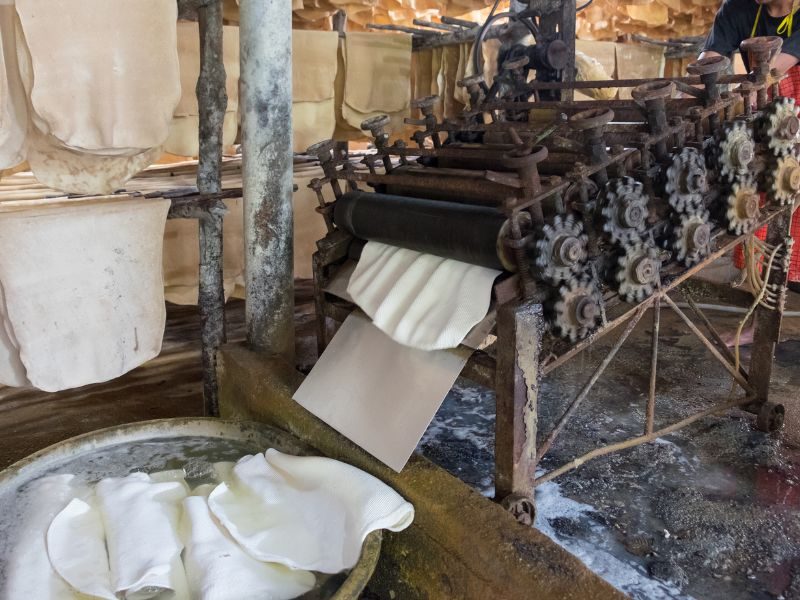
Latex is coagulated using diluted acetic or formic acid. The resulting rubber mass is then passed through roller mills to form ribbed sheets with a consistent thickness.
In industrial terminology, the material at this point is often referred to as coagulated rubber due to its semi-solid state prior to drying.
Ribbing patterns created during rolling help water drain more efficiently, supporting uniform smoking and drying.
Step 3 – Drying in Smokehouses: How RSS 3 Gets Its Name
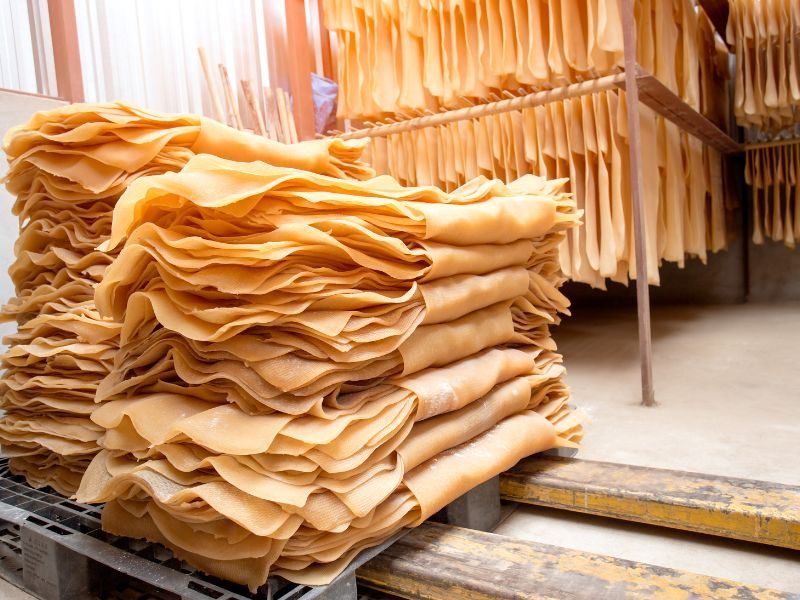
The rubber sheets are hung in a smokehouse chamber for 4–7 days.
-
Heat and smoke control is crucial to drive out moisture and add antibacterial properties.
-
Temperature and airflow are automated to avoid under/over-drying.
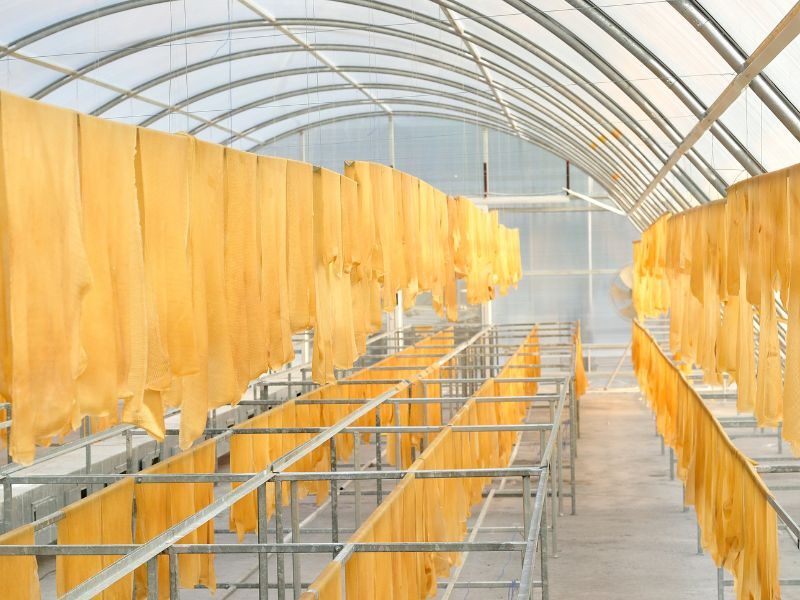
This is where the sheets take on their brownish, translucent look—and become smoked rubber sheets.
Step 4 – Quality Control and Grading (ISO 2000:2014, TCVN 3769:2016)
After drying, RSS 3 is inspected and graded. At Ngoc Chau, we follow both ISO 2000:2014 and Vietnamese Standard TCVN 3769:2016. Key metrics include dirt, ash, volatile matter, nitrogen, PRI, and Mooney viscosity.
These grading criteria are essential references for buyers evaluating processed rubber quality for technical applications.
Key performance parameters include:
| Test Parameter | Result | Method |
| Dirt Content | 0.01% | ISO 249:2016 |
| Ash Content | 0.20% | ISO 247-1:2018 |
| Volatile Matter | 0.44% | ISO 248-1:2018 |
| Nitrogen | 0.37% | ISO 1656:2019 |
| Mooney Viscosity | 89.2 | ISO 289-1:2015 |
| PRI | 88 | ISO 2930:2017 |
All results are documented in COA reports upon shipment.
Step 5 – Packaging, Palletizing, and Export Logistics
RSS 3 is baled or palletized depending on customer requirements, optimized for 20-foot container loading to maintain stability during transport.
This packaging format aligns with logistics-related queries such as rubber bale processing commonly seen in import documentation.
| Packaging Type | Quantity per Unit | Total Units | Total Weight (MTs) | Container Type |
| BALE | 33.33 kgs/Bale | 600 to 630 bales | 20 to 21 MTs | 20 DC |
| 35 kgs/Bale | 600 to 630 bales | 21 to 22.05 MTs | 20 DC | |
| PALLET | 33.33 kgs/Bale; 36 Bales/1.2MTs/Pallet | 16 pallets | 19.2 MTs | 20 DC |
| 35 kgs/Bale; 36 Bales/1.26MTs/Pallet | 16 pallets | 20.16 MTs | 20 DC |
We offer:
-
Custom wrapping
-
Moisture-proof lining
-
Labeling by batch, grade, and QA status
Why Ngoc Chau’s RSS 3 Rubber Production Process Sets It Apart
Ngoc Chau Natural Rubber differentiates itself through a production system built for stability, traceability, and export-grade reliability.
Our sourcing, processing, and grading methods are engineered to reduce variability—one of the biggest concerns for compounders and manufacturers.
Here’s what sets us apart:
-
Eco-conscious and traceable sourcing: All latex is collected from certified plantations with strict impurity control to ensure consistent feedstock.
-
Lab-certified uniformity: Every batch is tested under ISO/TCVN standards, giving manufacturers predictable Mooney viscosity, low dirt content, and stable PRI—key factors for tire and industrial rubber compounds.
-
Export-optimized packaging: Bales and pallets are engineered for maximum container efficiency, reducing freight cost per MT and preventing deformation during transit.
-
Full technical documentation: COA, TDS, MSDS, and batch reports are provided to support audits, customs clearance, and internal QA procedures.
-
Long-term sourcing support: We assist buyers with demand forecasting, supply scheduling, and compound compatibility assessments to safeguard production continuity.
In short, Ngoc Chau’s RSS 3 helps manufacturers minimize production risks, reduce material variability, and secure a stable long-term supply chain.
📌 Conclusion
Understanding the RSS 3 rubber production process allows procurement teams and manufacturers to better evaluate material stability, technical suitability, and long-term performance. With a transparent workflow—from latex collection to smokehouse drying and ISO-standard grading—Ngoc Chau provides a predictable, audit-ready supply of RSS 3 that helps reduce QC issues and improve downstream process efficiency.
If your operations require consistent sheet rubber for tire compounds, industrial hoses, conveyor belts, or automotive components, Ngoc Chau’s RSS 3 is engineered to meet those needs with reliability and export-grade quality.
📩 Contact Us for RSS 3 Samples & Pricing
📞 WhatsApp: +84 90 284 60 87
🌐 Website: www.ngocchausupplier.com
✉ Email: info@ngocchausupplier.com
❓FAQs About RSS 3 Rubber
Q1. What is ribbed smoked sheet rubber?
Ribbed Smoked Sheet (RSS) rubber is a form of natural rubber produced by coagulating fresh latex, rolling it into ribbed sheets, and drying it in a smokehouse. The ribbed texture improves drainage, while smoking enhances preservation, color stability, and mechanical performance.
Q2. How long does it take to make RSS 3?
The full RSS 3 production cycle typically takes 4–7 days, depending on smokehouse temperature, humidity, airflow, and sheet thickness. Higher humidity or thicker sheets may extend drying time.
Q3. What is the rubber sheet production process?
The standard workflow includes:
Coagulation → Milling → Washing → Dripping → Smoking → Grading → Packaging
This process ensures consistent sheet quality that meets international standards such as TCVN 3769:2016 and the Green Book.
Q4. Can customers request samples or factory visits?
Yes. Ngoc Chau Rubber provides samples, COA (Certificate of Analysis), production videos, and virtual factory tours upon request. In-person factory visits can also be arranged for qualified buyers and partners.


 Ms Evan